





Home1-800-Hotline Posts & Newsletter
1800Hotline 009 // $10B better-for-you signals, RTD velocity is exploding, and a $105M subscription exit

From $10B better-for-you signals to breakout RTD velocity, plus a major subscription exit and the brands pushing things forward.

Hey DTC Fam,
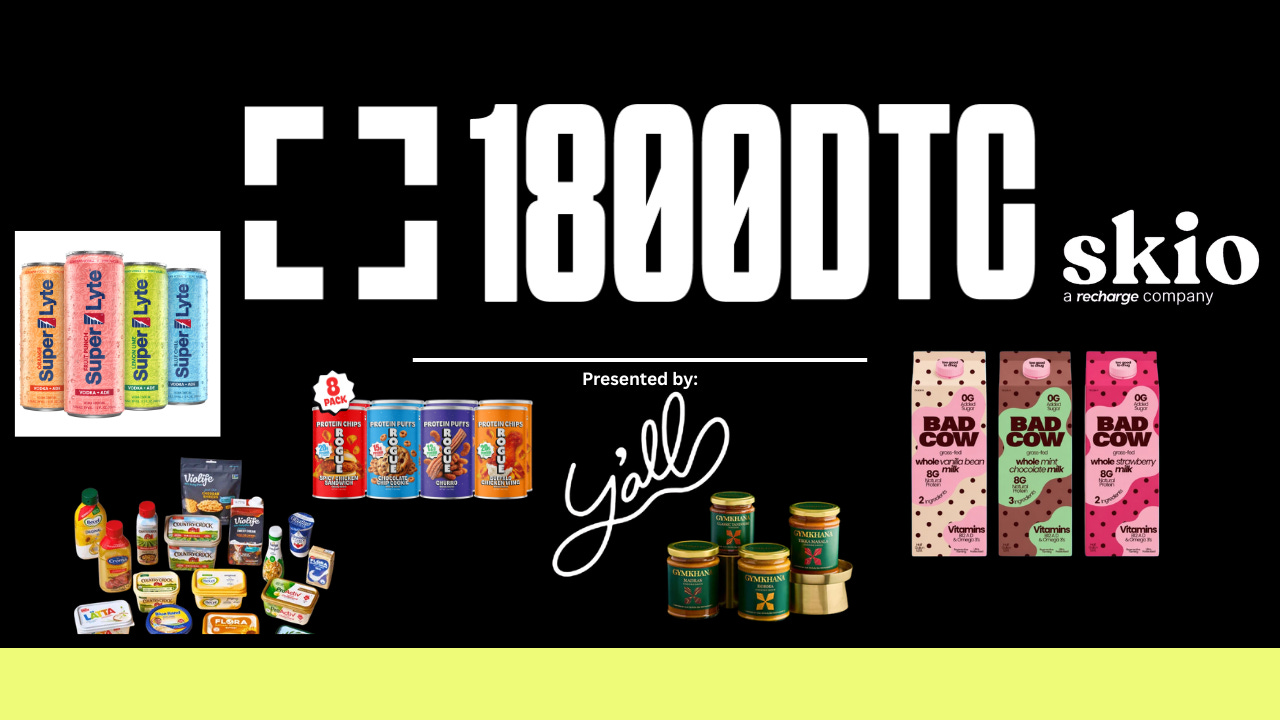
We’re seeing billion-dollar signals in better-for-you, breakout velocity in RTD, and brands launching with distribution from day one. At the same time, the infrastructure layer is consolidating, with major acquisitions reshaping the ecosystem.
Let’s get into it.
But first, take a second to fill out the form. It helps us connect the right people and surface opportunities across the community.
Connect w/ the 1800DTC Community

This edition is presented by Y’all.
If you’ve been with us for a while, you are probably familiar with Y’all: a boutique performance creative and marketing agency for direct-to-consumer CPG brands.
(They do great work and have partnered with brands like FlavCity, Pamos, and Popsmith.)
Their founder, Travis Halff, recently took the opportunity to share his expertise on 1800DTC as a guest author:
For many of you, these topics will make a great morning read with a hot cup of coffee. He’ll continue sharing his insights, but if you’re thinking, ‘This guy knows what he’s talking about,’ skip the line and reach out to his team directly.
Bonus: Get a free in-depth creative diversity audit by filling out an inquiry form and mentioning 1800DTC in your submission.


Before jumping in further, we wanted to share another newsletter we're fans of: Alex Greifeld has almost two decades of experience in eCom and shares insights in her newsletter, No Best Practices.
The secret to 9 figure scale is not a media buying hack.
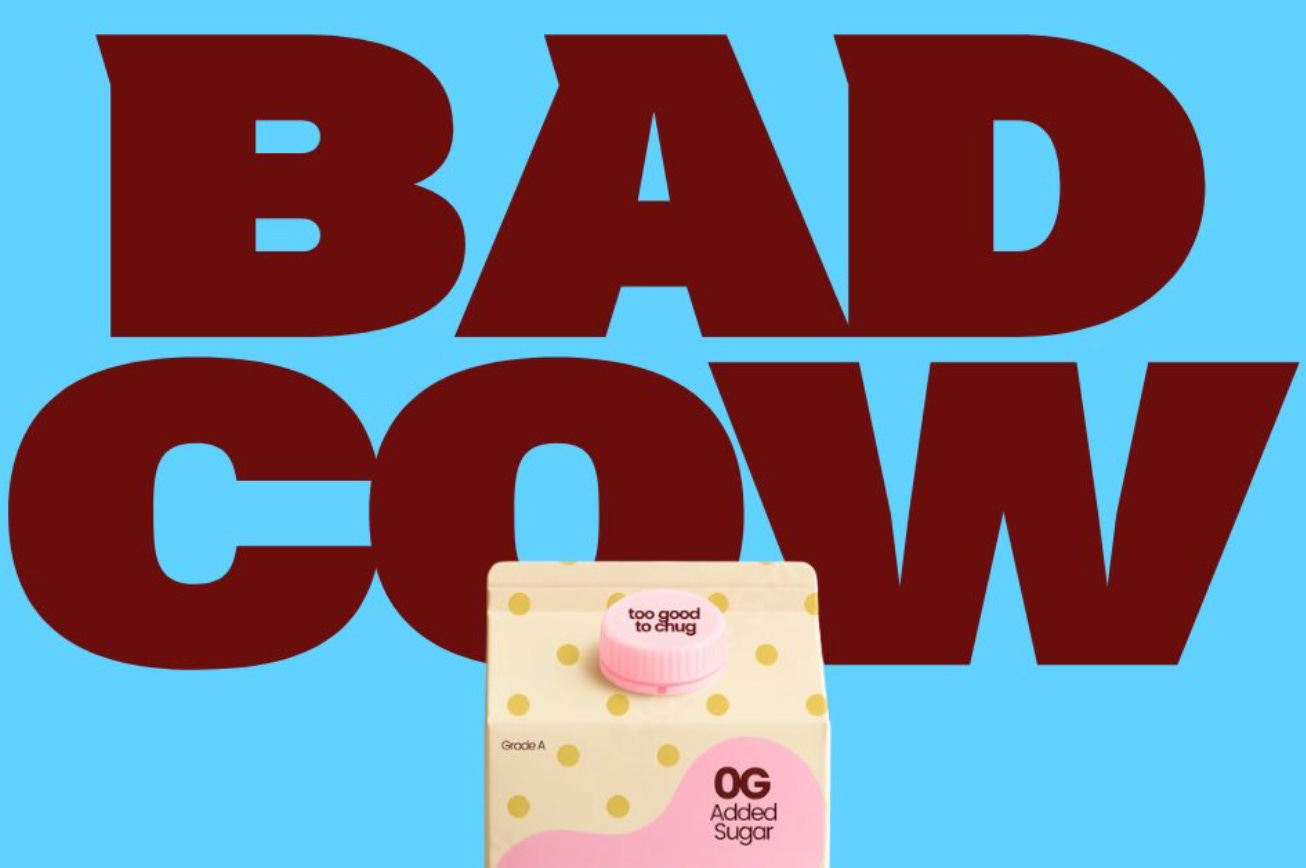
The milk aisle is one of the most ignored in the grocery store. Olivia Margansky decided to do something about it.
Bad Cow is a grass-fed whole milk brand built around a simple premise: milk is actually good for you, it just hasn’t had a brand worth caring about. So she made one. Bold packaging, polka dot cartons, a pink cap the color of a cow’s udder, and a motto printed right on the lid — too good to chug.
The product backs it up. Every SKU is Grade A, grass-fed whole milk with 8g of natural protein, 0g added sugar, and vitamins B12, A, D, and Omega 3s. The flavor lineup runs from the basics — whole, 2%, non-fat — to a “Neapolitan drop” of vanilla bean, mint chocolate, and strawberry, each made with two or three real ingredients. The cinnamon honey variant is positioned specifically for your morning routine. There’s already a collab with Goodles in market.
The origin story is what makes it interesting. Bad Cow started as a 25-slide class project. It became 60 slides. Then a brand, a strategic plan, and a tangible product. Olivia couldn’t stop building it — which is usually the sign worth paying attention to.
The brand is early stage and pre-retail, but the identity is already sharper than most companies twice the size. If you’ve spent any time in the better-for-you CPG space, you know how rare that is.
Early stage. Right founder energy. One to watch.
Better-for-you just got a $10B reminder
Flora Food Group (parent of Violife) is reportedly exploring a sale near a $10B valuation. One of the biggest signals we’ve seen in the category.
This isn’t just a headline. It’s validation.
Better-for-you is no longer niche. It’s scale, repeat purchase, and global demand all wrapped into one. The brands that win here aren’t just “healthier” they make the switch easy, trusted, and accessible.
Capital is still chasing that.
RTD velocity is getting absurd
Stateside’s Super Lyte is already moving. 120,000 cases in five weeks and aiming for 1.5M in year one.
That’s not a slow build. That’s instant traction.
RTD isn’t just crowded, it’s compressed. The winners are dialing in:
• familiar formats with a twist (“’ade” is doing work)
• clear positioning out of the gate
• distribution that hits early and hard
This playbook is starting to look repeatable. Nail the product, package it in something consumers already understand, then move fast on shelf.
Velocity like this doesn’t happen by accident.
In 2020, Kennan Frost dropped out of college, left his engineering job at Pinterest after a panic attack, and applied to Y Combinator with an idea he ended up pivoting away from twice during the batch. The thing that finally clicked: a cleaner, faster way for Shopify brands to sell subscriptions. He called it Skio.
Five years later, Skio was acquired by Recharge - its biggest competitor - for $105 million in cash. The company had raised $8 million total. At the time of sale it was at $32 million ARR and had processed $4 billion in payments.
The Skio story is worth sitting with for a minute. This was not a company that raised a massive round, hired a 50-person sales team, and bought its way to scale. No marketing spend. No dedicated sales org. Growth came entirely through product quality and word of mouth inside the Shopify merchant ecosystem. Frost eventually stepped back and handed the reins to a new CEO (Aidan Thibodeaux), who kept the same discipline: spend on engineering, let the product do the selling.
And it is not happening in isolation. Recharge itself nearly died in 2020 when Shopify called to say they were building a native subscriptions product. Founder Oisin O’Connor rebuilt the entire platform from scratch over two years while 15 competitors showed up. One of those competitors was Skio. Now Recharge has absorbed it, and together the two platforms power more than 20,000 merchants and process over $20 billion in GMV annually.
The subscription layer is becoming core infrastructure for retention-first brands, and the platforms that survive are going to be the ones with the most merchant data, the deepest integrations, and the scale to keep shipping. Recharge is betting that the platform with the best benchmark data wins. With this acquisition, they now have a lot of it.
What this tells operators: the category is maturing. The scrappy challengers that pushed incumbents to get better are now getting absorbed by those same incumbents. If you are evaluating subscription tooling, the competitive field just got smaller. And if you are building a product company inside the Shopify ecosystem, the Skio exit is a reminder that capital efficiency and product focus still produce real outcomes.
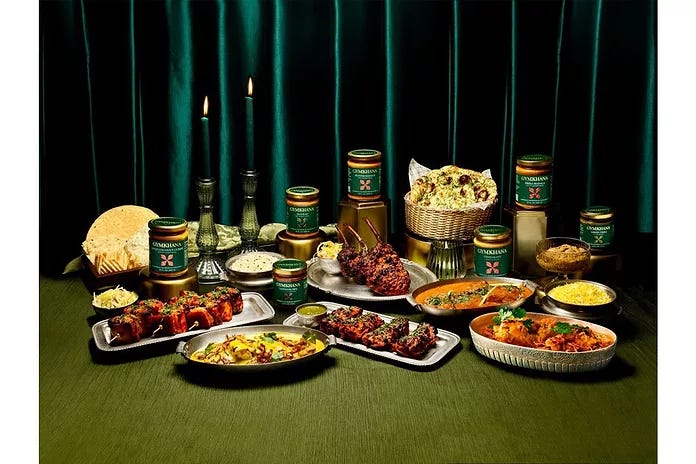
Michelin to mass is scaling fast
Gymkhana Fine Foods just raised $8.5M in Series A led by CAVU Consumer Partners.
This is the restaurant-to-retail playbook, done right.
Gymkhana isn’t just any brand, it comes from a two-Michelin-star restaurant with built-in credibility, and has already expanded into retail through major UK channels.
What this signals:
• premium food brands are moving downstream into CPG
• brand equity from hospitality actually converts on shelf
• investors are still backing differentiated, culture-led food brands
We’re seeing more chefs and restaurants turn into scalable product companies, not just experiences.
And capital is leaning in when the story is strong enough.
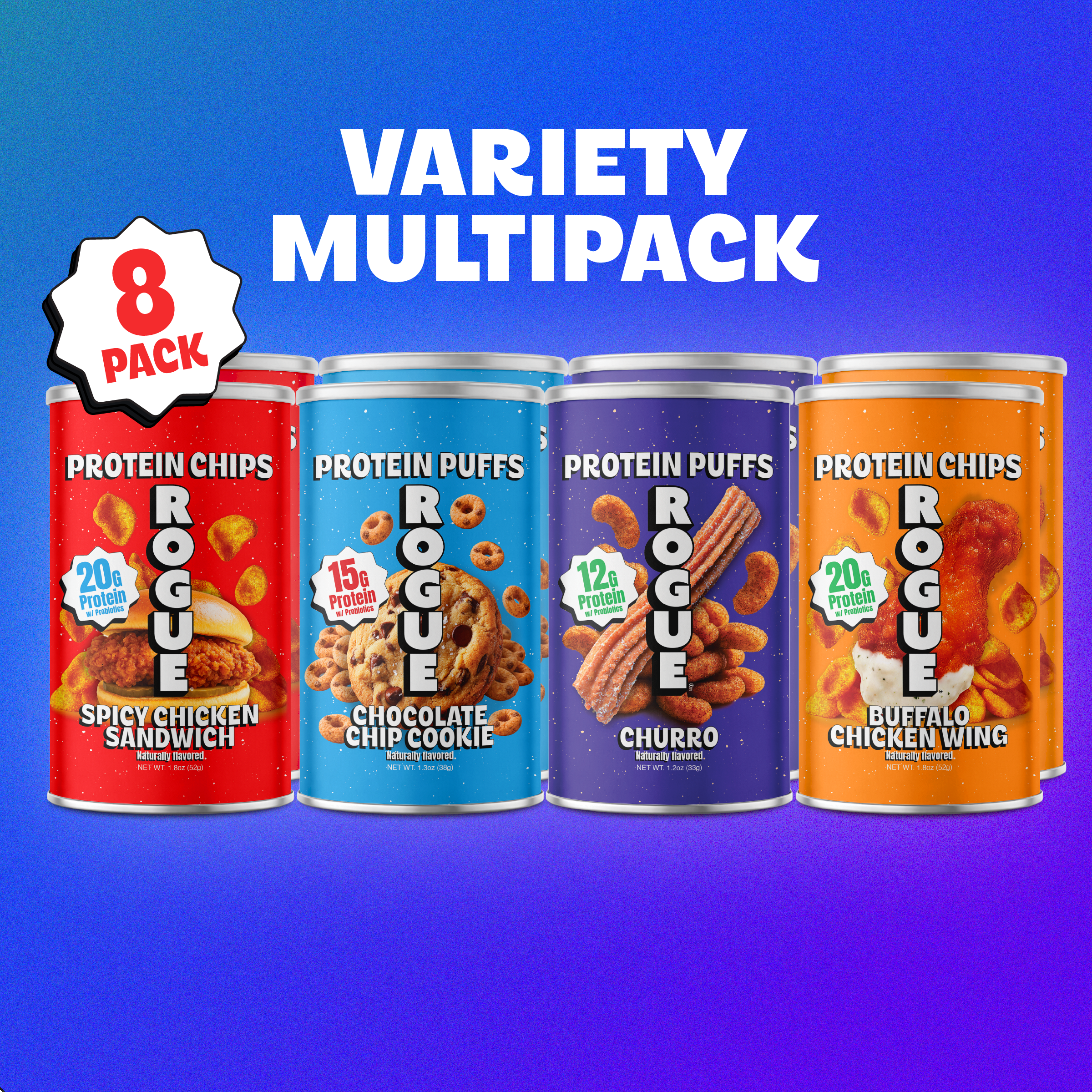
Protein chips are becoming the new soda war
Rogue Snacks just launched with high-protein chips, no seed oils, and four SKUs.
On the surface, another protein snack.
Under the hood, something bigger.
This is a brand built out of Science Inc. the team behind Dollar Shave Club and Liquid Death with plans to hit 2,800 Walmart doors out of the gate.
That’s not testing. That’s scale from day one.
What’s happening:
• protein is becoming table stakes in snacking
• “clean label” (no seed oils, no artificial ingredients) is now expected
• brand + distribution + velocity are all launching together, not sequentially
We’re watching the snack aisle shift from indulgence vs. health to both at the same time.
And the brands that package performance like junk food are winning early.

RSVP - Marketing Executive Dinner - 5/4 (NYC)
RSVP - Smarterships Victoria Launch Party - 5/14 (BC)
RSVP - Post-Connect Happy Hour with Orita & PostPilot - 5/14 (Culver City)
RSVP - How Smart Brands Win In A Crowded Isle - 5/20 (NYC)
RSVP - The Wellness Lounge - 5/20 (NYC)
RSVP - DTC Dinner Club - 5/20 (NYC)
RSVP - Sheinnovates NYC - 5/28 (NYC)
That is Signals for Issue 009.
$10B signals in better-for-you, RTD brands hitting velocity early, and a $105M exit in subscriptions. What’s your read on where the real opportunity is right now? Hit reply.
We read every reply.
— Zach and the 1800Hotline Team
Find a partner, tool, or agency: 1800DTC.com
Become a sponsor: Partner with us
Get connected with our partners: Brand Form

Everything you need to build a better DTC brand, business and tech stack.