1800Hotline 027 // Prime Day carts got practical, creatine hits the Sprouts shelf, and matcha named after an 89-year-old

Zach Bingham is focused on building one of the strongest communities in commerce as the CEO of 1800DTC. Based in Utah, he brings his expertise and knowledge from working closely with brands and across leading platforms and agencies.
Hey DTC Fam,
Prime Day is over, but the deal calendar didn't get any quieter. TikTok Shop grabbed the mid-July window Amazon left behind, the Prime Day receipts tell us a lot about where the consumer's head is at, and grocery just got a $1.7B shakeup. Plus a founder feature we're really proud of.
Let's get into it.
Connect w/ the 1800DTC Community

This edition is presented by #CELE
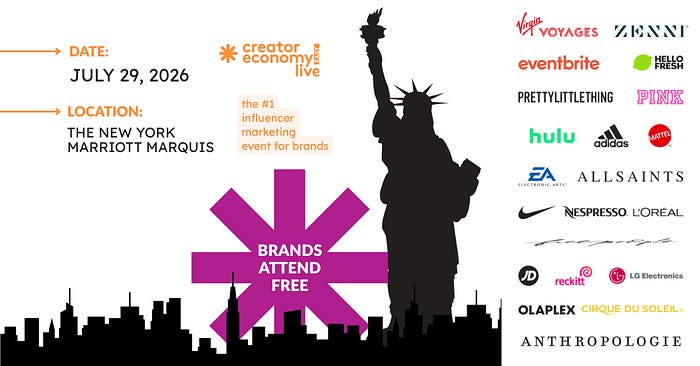
Sold Out? Not for 1800DTC: Come Mingle with Influencer Marketing’s Top Minds
-
500+ brands in attendance
-
100+ creators ready to partner
-
100+ platforms and agencies
Creator Economy Live East hits the Big Apple on July 29th, bringing the industry together to tackle the biggest questions around influencer marketing. Top industry voices will lead sessions and meetings focused on building creator partnerships that last, measuring campaign results, and everyone’s favorite topic: using AI without losing the human touch.
It’s the ultimate influencer marketing event for brands on the East Coast. With names like Anthropologie, Estée Lauder, L’Oréal, Magnum Ice Cream, Scrub Daddy, and Disney on the roster, we can’t wait!
**Free passes for the first 500 brands have already sold out, but we’ve secured a handful exclusively for the 1800DTC community.
**With the event just three weeks away, we recommend grabbing yours today! See you there.
Claim one of the last free brand passes
Brand We’re Watching: Muracha
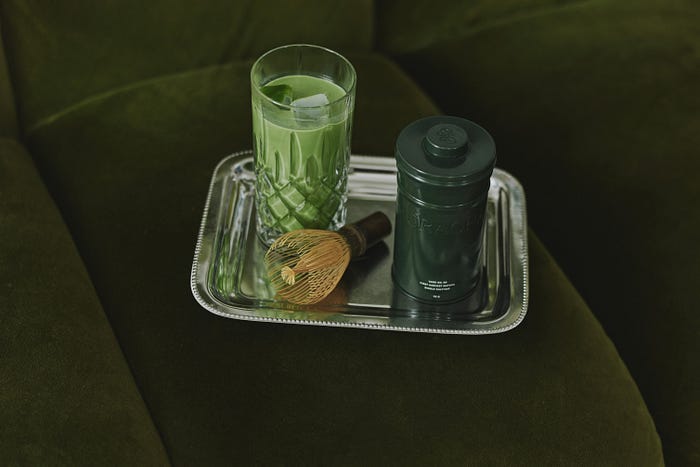
Lifestyle shot courtesy of Muracha
Muracha First-Harvest Matcha Launches with Debut Release, Yame No. 89
Matcha is having its moment, and most brands are chasing it with green packaging and vague sourcing claims. Muracha went the other direction: one release, one farm, and a story you can actually trace.
Founded by sisters Megan Lore and Katie Roth, Muracha sources only first-harvest matcha directly from Japan, where the earliest leaves of the season are prized for their naturally smooth character and steady, focused energy. Their debut release, Yame No. 89, comes from a family-run tea farm in Yame, Japan, and the name isn’t random. The woman behind it started working those fields at 19 and still oversees every harvest today at 89 years old. Her family carries the work forward with the same patience and precision, and Muracha stone-mills it the traditional way for a glass that’s smooth, balanced, and quietly complex.
Beyond the tin, the brand is built around the ritual itself, with whisks, tools, and sets designed to make the daily pause feel like a practice rather than a chore. In a category flooded with commodity powder, single-origin storytelling and generational craft are the moat. First release, first harvest, and worth watching.
Shop first-harvest matcha from Muracha
Unwrapped w/ Sabrina Grand of Good Greed
Most candy brands think the fix for high sugar is loading gummies with artificial sweeteners and extreme fiber. Alana, Carolyn, and Sabrina built a whole company around proving that wrong.
The three university friends are the founders of Good Greed, a low-sugar, prebiotic gummy candy made with real fruit. The brand brings a gut-friendly formulation to the snack aisle without relying on fake ingredients. The idea came out of their own shared frustration. They always loved sweets but hated the sugar crash, and they noticed the healthier options on the market just left them with severe IBS.
We sat down with co-founder Sabrina Grand to talk about creating a gut-friendly sweet, the problem with fiber overload, and how to make a healthy gummy that tastes the way candy should.
Check out the full founder feature

Reformation Just Filed the Proof That Profitable DTC Is Possible
After years of the industry writing obituaries for the DTC model, Reformation is charting a public debut on the back of it. The womenswear brand filed to list on the NYSE under the ticker “REF,” and new analysis of the filing published this week shows why everyone is paying attention: roughly $507 million in 2025 net revenue, positive net income nearly every year since 2018, 90% of revenue from DTC, and 20 consecutive quarters of double-digit growth. Q1 2026 revenue jumped 30% to $112.3 million.
The numbers underneath are the real lesson. Reformation has held a marketing-to-revenue ratio of just 9% for four straight years, is profitable on a first-order basis, and crossed 1 million active DTC customers in 2025, with a large share of new customers acquired through unpaid channels. Full-price sales make up about 80% of DTC revenue thanks to its scarcity model. No discount treadmill, no paid-acquisition dependency, no growth-at-all-costs hangover. If the July debut lands, this becomes the healthiest public proof point the DTC model has had in years.
The Prime Day Receipts Are In, and Shoppers Are Getting Harder to Please
The postmortem data on Amazon’s June Prime Day landed this week, and it says a lot about the 2026 consumer. Per Numerator, only 59% of shoppers said they were satisfied with the deals, down from 68% last year, even though discount levels largely matched 2025. Average household spend fell to $143.45 from $156.37, and the average price per item dropped to $23.23. The top sellers? Pet treats, protein shakes, and trash bags. People are using deal events to stock up on everyday essentials, not to splurge.
Analysts are already gaming out the ripple effects: with Prime Day pulled into June, Amazon may shift its October event into late September, and retailers with physical stores are being pushed to turn deal weeks into experiences rather than mirroring Amazon’s convenience play. For brands, the signal is clear. Deal events are becoming replenishment events. Plan your offers, bundles, and subscription hooks accordingly.

-
Kreatures of Habit takes its Daily Bar national at Sprouts. Michael Chernow's wellness brand announced Wednesday that its creatine-powered Daily Bar (20g plant protein, 3g creatine monohydrate) is landing in Sprouts stores nationwide, its first-ever retail launch, featured on the Forager Finds display. Chernow is celebrating with a multi-state RV tour and community 5Ks with local run clubs starting this week. A masterclass in pairing a retail launch with community activation.
-
Milani beat its TikTok Shop launch goal by more than 250%. The beauty brand launched its new tubing mascara on TikTok Shop before traditional retail and blew past its sales goal by over 250% in the first two weeks, pulling 1.5 million impressions along the way. Milani is also integrating its Shopify store with LLMs including ChatGPT. Shop-first launches are officially a playbook, not an experiment.
-
Misfits goes beyond plant-based with its new Stuffed line. The candy-inspired protein bar brand launched Misfits Stuffed this week, its first dairy-based range, packing 17g of protein from whey, casein, and collagen into a creamy-center, double-dipped bar with just 1g of sugar and 170 calories. Three flavors at launch, sold exclusively DTC and on Amazon at $30.99 for a 12-pack. With over 40 million bars sold, this is a brand widening its aperture from vegan-only to the whole protein aisle.
-
TikTok Shop's biggest summer event just wrapped, and it's officially a tentpole. Deals For You Days 2026 closed out July 2 after its longest run yet, expanded from 13 days last year to more than two weeks and starting earlier to run alongside Prime Day. More than 300 brands participated, with Clarks, Disney Store, and Petco all launching on Shop during the event. Last year's edition saw a 262% jump in participating sellers, so watch for this year's numbers to drop soon.
-
Amy's Kitchen is championing the new non-UPF certification. In an interview with Modern Retail this week, CEO Paul Schiefer broke down the Non-GMO Project's Non-UPF Verified certification and what it takes to earn it: flavor derived from real ingredients, no synthetic dyes, no industrial shortcuts. Amy's was the first frozen food brand certified, joining founding members like Simple Mills, Spindrift, and Chomps. As ultra-processed scrutiny grows from regulators and retailers, expect this seal to start showing up in pitch decks and on packaging fast.
-
A new DTC brand just entered the chat: Cocoon. The digitally native premium blanket brand launched this week with a debut collection of 18 colorways priced under $275, citing projections that the blanket category grows from $26.6 billion this year to $45.9 billion by 2034. Yes, people are still launching digitally native brands in 2026, and the sleepy-category playbook is alive and well.
Event Radar
CHICAGO QUARTERLY ECOM HAPPY HOUR: SNACK RUN — THURSDAY, JULY 9 | CHICAGO, IL
SHOPIFY DOTDEV WEEK SATELLITE EVENTS — JULY 21 TO 24 | TORONTO, ON
Cart Basel Morning Mixer | Agency Brunch waitlist | CN Tower Dinner | Phoenix After Dark | Frat Party
FROM CART TO SHELF — WEDNESDAY, JULY 29 | NEW YORK, NY
That’s a wrap for Field Notes this week.
If there’s a thread running through this edition, it’s discipline. The Prime Day carts (trash bags and protein shakes) say shoppers are buying on value and utility, not impulse. And the brands winning this week earned it the boring way: Reformation with a 9% marketing ratio and 20 straight quarters of double-digit growth, Milani treating a channel launch like a product launch.
See you Tuesday.
— Zach and the 1800Hotline Team
Find a partner, tool, or agency: 1800DTC.com
Become a sponsor: Partner with us
Get connected with our partners: Brand Form
Join 17k+ subscribed
Get The eCommerce Pulse
The twice-weekly briefing for operators, founders, and partners shaping modern DTC.