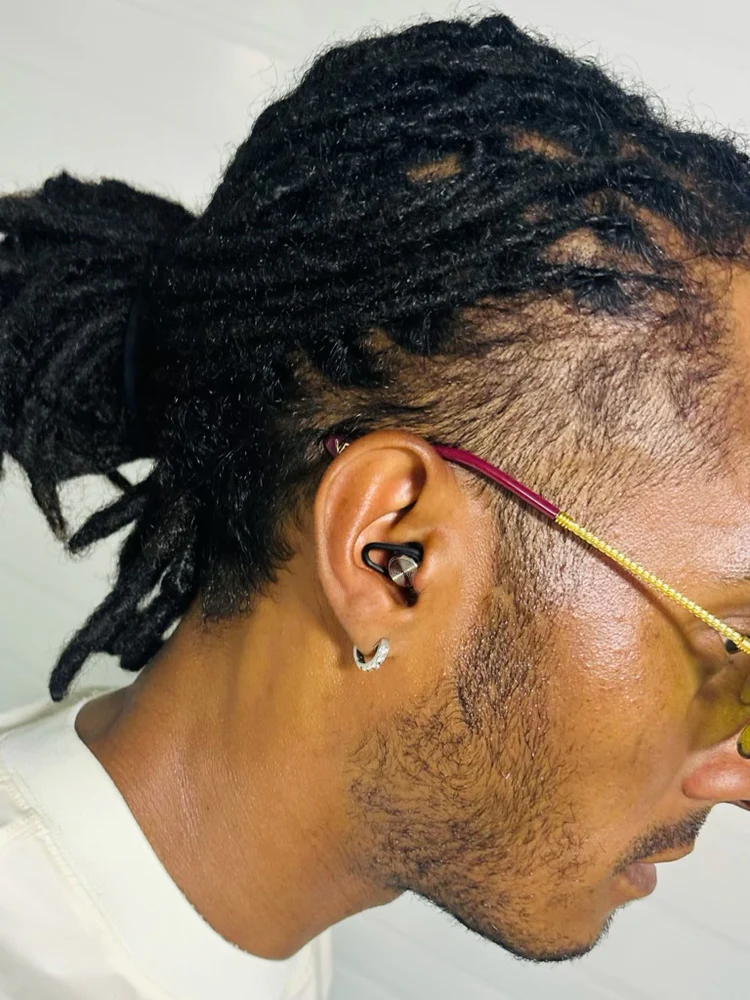
Hears Earplugs: Protecting Music Lovers' Hearing Without Compromising the Sound
For anyone who has ever stood in front of a speaker stack at a festival or spent hours in a loud venue, the tension between protecting your hearing and actually experiencing the music has always felt like a trade-off with no good solution. Foam earplugs muffle and distort, turning a live performance into something that sounds like it is happening behind a wall. Doing nothing means walking away with ringing ears and accumulating damage that compounds silently over years of exposure. Hears was founded in Amsterdam by five friends who understood that tension firsthand and refused to accept it as inevitable. Among the founders are DJs Sunnery James and Ryan Marciano, artists who have built careers around sound and who had more reason than most to take hearing protection seriously. Their involvement is not a celebrity endorsement layered onto an existing product — it is the origin of the brand itself, born from real experience in real loud environments and a genuine conviction that music lovers deserve a solution that lets them hear everything without losing their hearing in the process.
Patented Flat Attenuation Technology: How Hears Keeps Music Crystal Clear at Lower Volumes
The science that makes Hears earplugs different from every foam earplug in a convenience store comes down to a single engineering principle: flat attenuation. Conventional earplugs work by physically blocking sound, which reduces volume but does so unevenly across the frequency spectrum — typically cutting high frequencies far more aggressively than low ones, which is why music heard through standard earplugs sounds muddy, muffled, and stripped of the detail that makes it worth listening to in the first place. Hears' patented flat attenuation filter technology takes a fundamentally different approach, reducing sound pressure evenly across all frequencies so that the full sonic character of the music is preserved at a safer volume level. The result is an earplug that turns down the volume without turning down the quality — every instrument, every vocal, every transient detail remains intact, just at a level that does not damage the delicate hair cells of the inner ear that, once lost, do not regenerate. For audiophiles, musicians, and concertgoers who have dismissed hearing protection because of the compromise it demands, Hears removes that compromise entirely.
Featherlight, Near-Invisible, and Built for the Way Music Lovers Actually Live
Hearing protection only works if people wear it, and one of the most persistent barriers to consistent earplug use among music fans and nightlife enthusiasts is the social and aesthetic friction of wearing something conspicuous and uncomfortable in an environment defined by style and self-expression. Hears addressed this barrier as seriously as it addressed the acoustic engineering challenge. The earplugs are featherlight, designed to sit comfortably in the ear canal for hours without the fatigue and pressure buildup that make standard earplugs impossible to wear through a full show. They are near-invisible, sitting discreetly in the ear without announcing themselves to everyone in the room. This combination of physical comfort and low visual profile removes the practical and social objections that have historically kept hearing protection out of pockets and off ears at exactly the moments when it is most needed. Hears was designed for concerts, festivals, club nights, and any environment where loud sound is part of the experience — products built for real use cases by founders who live those use cases themselves.
From Amsterdam to the Global Stage: Hears' Mission to Make Hearing Protection a Cultural Norm
Noise-induced hearing loss is one of the most prevalent and entirely preventable forms of hearing damage in the world, affecting hundreds of millions of people globally, with music lovers, nightlife regulars, and live event attendees among the most consistently exposed populations. Yet hearing protection remains vastly underused in exactly these communities, largely because the available products have never been designed with their specific needs, aesthetics, or values in mind. Hears was founded to change the cultural relationship between music lovers and hearing protection — not by lecturing or warning, but by creating a product so well-designed and so well-suited to the environment that wearing it becomes the obvious choice rather than the reluctant one. The Amsterdam roots of the brand matter here: the city has one of the richest and most respected electronic music and nightlife cultures in the world, and launching a hearing protection brand from that context gives Hears a credibility and cultural fluency that no outsider brand could manufacture. As awareness of hearing health grows among younger generations and the conversation around noise-induced hearing loss enters the mainstream wellness dialogue, Hears is positioned as the brand that was already there — built by the community, for the community, with the technology to back it up.