Under The Hood: Daina from Health-Ade

Tim is the founder and creator of 1800DTC. He's also the VP of Growth at Storetasker, a talent network for the best Shopify designers, developers and marketers in the world.

Welcome Daina! Let’s start with a business update since the “How I Built This” podcast with Guy Raz in late 2020. You were on track to hit $200m in sales: How has that progressed throughout the pandemic and into today?
Health-Ade’s continuing to grow!
Over the last 10 years, if you had to sum up the story of Health-Ade in one word, it would be “growth”. And that’s just as true today as it was in 2020. We’re seeing 20% growth year over year and no signs of slowing down.
We’re expanding in retail and our more recent online efforts (somewhat forced by Covid) are also paying off. On the business operations side, we’re still evolving everyday. Manufacturing has its challenges as we’re trying to meet the growing demand. A good problem to have, but a challenging one nevertheless.
Tell us about the new title: From CEO to Chief Mission Officer: How did that come about?
I was CEO for 10 years and in a recent change of control about a year ago, I took the opportunity to step away from that role and into this new role. Chief Mission Officer felt like the right title. It felt true, authentic and original.
My co-founder Vanessa stepped up as CEO which has been so cool to see, and that puts me back into a seat of pure innovation, finding more ways to unlock the power of the gut for our consumers.
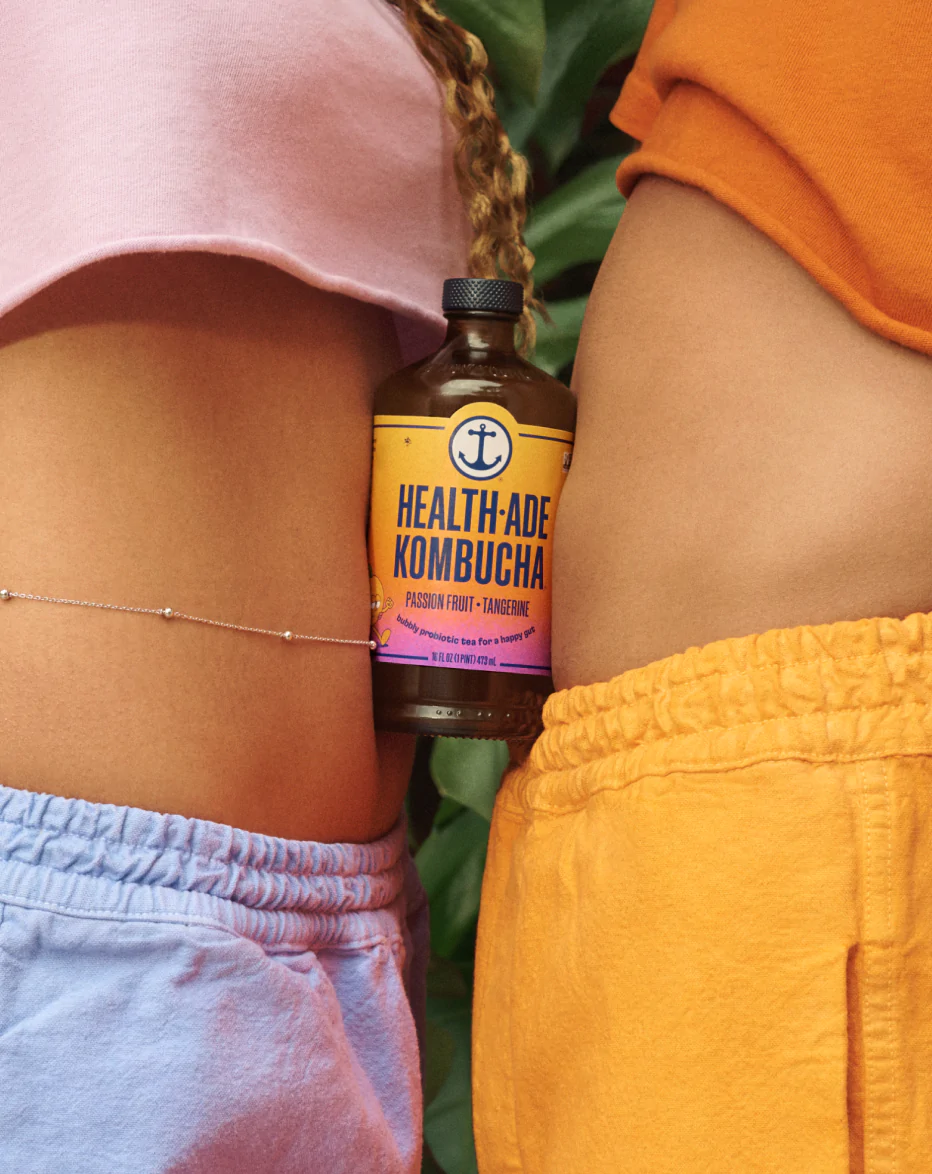
For a happy gut
Awesome. Congrats! So what’s cooking on your side? What are some of the initiatives that you want to drive forward?
Well first off - I'm leaning heavily on my nutrition background. I went to graduate school for nutrition and I’m rekindling that love - because if we want to truly be educating others on the outside - we gotta become experts on the inside. So there's a lot of education happening on a weekly basis with our employees.
Another part of it is thinking about Health-Ade over the next 5 years. We want to be synonymous with “this is good for my gut” vs. being a really tasty, cool kombucha. Doing this well involves real innovation on the product front as well as the clinical trial front. And then the last piece is focusing on sustainability & responsibility for the company. In the past, Health-Ade’s always donated to causes we care about, but now we are putting real resources and strategy behind it. We're focused on bringing gut health to the underserved, and not for the purpose of growing kombucha sales, but really for increasing the level of education around gut health.
So yeah, that's a little bit about my job! It’s very fulfilling.
Exciting. Let’s chat D2C. What’s worked over the last few years?
Well first - I'll just say out loud that we are a refrigerated, heavy, perishable product packaged in glass. Which is very unfriendly to online delivery.
That’s one of the reasons that we never really pushed e-com in the first 8 years of the business. Also, consumers were buying their kombucha at the store, so that’s where we focused all our efforts. But of course, Covid changed that overnight - and we made the call to invest in the channel.
The first thing we did was find capital to invest in it. We don’t have unlimited money, so we had to pull budget for D2C from other budgets we had allocated to restaurants & cafes which were no longer in use.
We hired an experienced ecom lead to help get our e-commerce up and running. Internally, we didn't even know what the word “tech stack” meant at the company prior to this guy coming on board. So we had a big learning curve. But bit by bit, we started cracking the code - and there’s still a lot more growth to come in that area for us.
What are some of the pieces of D2C that you value most?
We love the unlimited shelf space. We’re able to stock every single flavor, even the ones that aren’t sold nationwide. In retail, a buyer may only agree to take on 1 or 2 flavors, but online we can sell whatever we want. And interestingly: Our variety packs do best online. And that’s a bundle we don’t sell anywhere else.
The next big thing is the direct line of communication with our consumer. The feedback we get on product launches and promotions is really huge.
And finally: Subscriptions. We use Recharge for that, and subscriptions have been working really well for us.
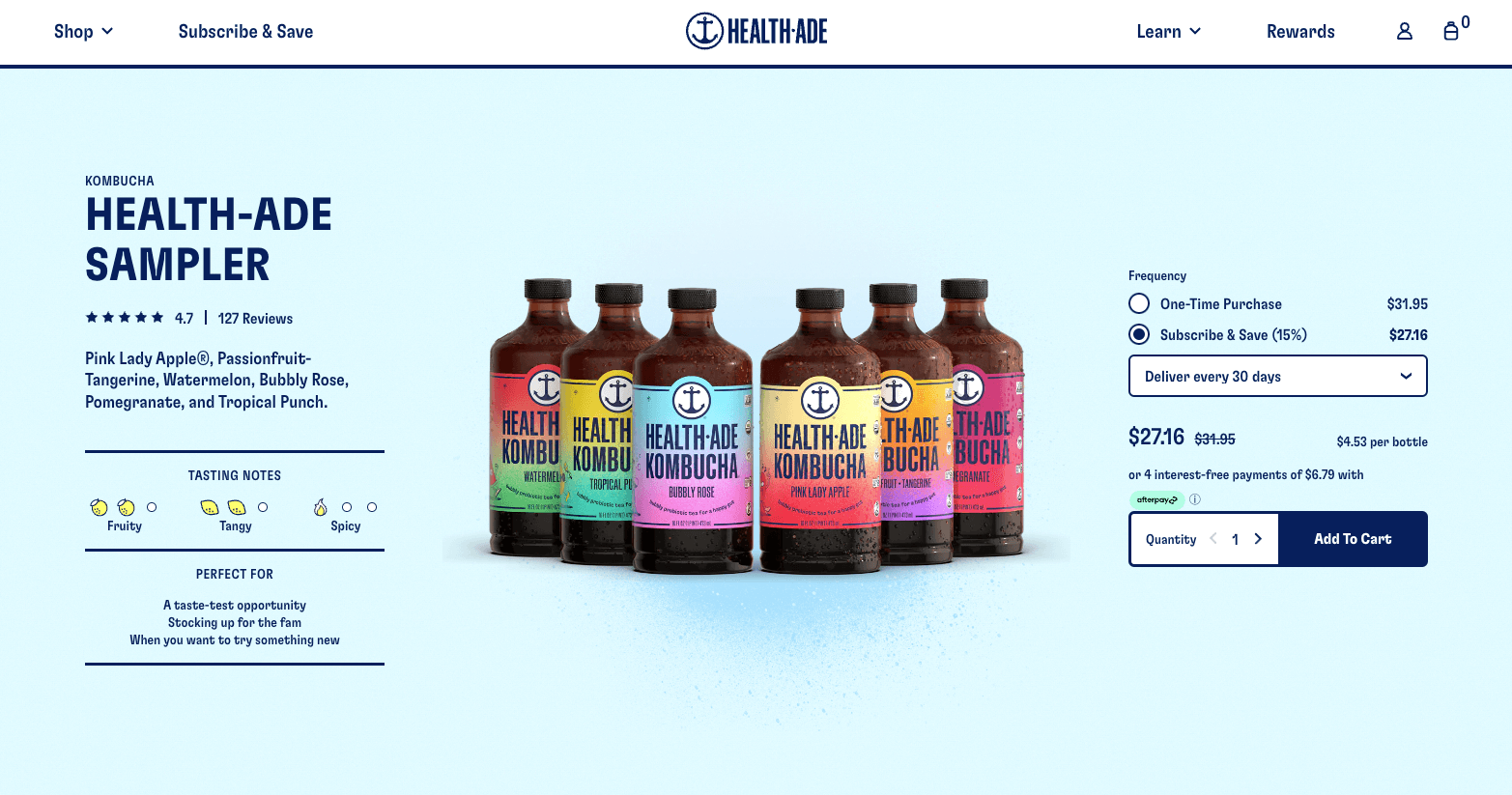
The variety pack
Any other tools you leverage?
Shopify for the backend. Yotpo to create rewards, capture reviews and such. Zendesk for Customer Support. Klaviyo for email and Attentive for SMS.

Tool mentioned
Shopify
Shopify is a commerce platform that allows anyone to set up an online store and sell their products. It's the go-to eCommerce platform for young direct-to-consumer brands. Its ease of use and setup is what's most attractive to merchants, but also the incredibly vast Shopify app store.

Tool mentioned
Yotpo
Yotpo helps brands collect product reviews that build social proof, crucial for driving sales. With AI-powered review widgets, Yotpo can easily gather high-quality product reviews that influence customer purchasing decisions. Yotpo's partner integrations allow brands to display reviews and star ratings across social media and search engines like Google as well.

Tool mentioned
Zendesk
Zendesk is a customer support tool. It's got 2 main features: ticketing and knowledge base. Ticketing: Zendesk gathers customer queries in one place where you can manage and respond to customer questions efficiently. Knowledge base allows you to create an FAQ section to guide your customers.

Tool mentioned
Klaviyo
Klaviyo is a marketing platform that provides email marketing tools for ecommerce businesses. It connects to online stores and enables customer segmentation based on purchase history and customer preferences.

Tool mentioned
Attentive
Attentive® is the omnichannel marketing platform redefining how brands and people connect. Trusted by leading global retail and ecommerce brands and high-growth consumer companies, Attentive’s mobile foundation gives marketers a stronger signal for recognizing customers, personalizing messaging, and delivering performance across SMS, email, RCS, and push. Our intelligence layer and agentic AI unify customer profiles and act on real-time data, giving marketers what they need to turn messages into moments that drive action, revenue, and loyalty. To learn more or request a demo, visit www.attentive.com or follow us on LinkedIn, X (formerly Twitter), or Instagram.
Brand mentioned
Health-Ade
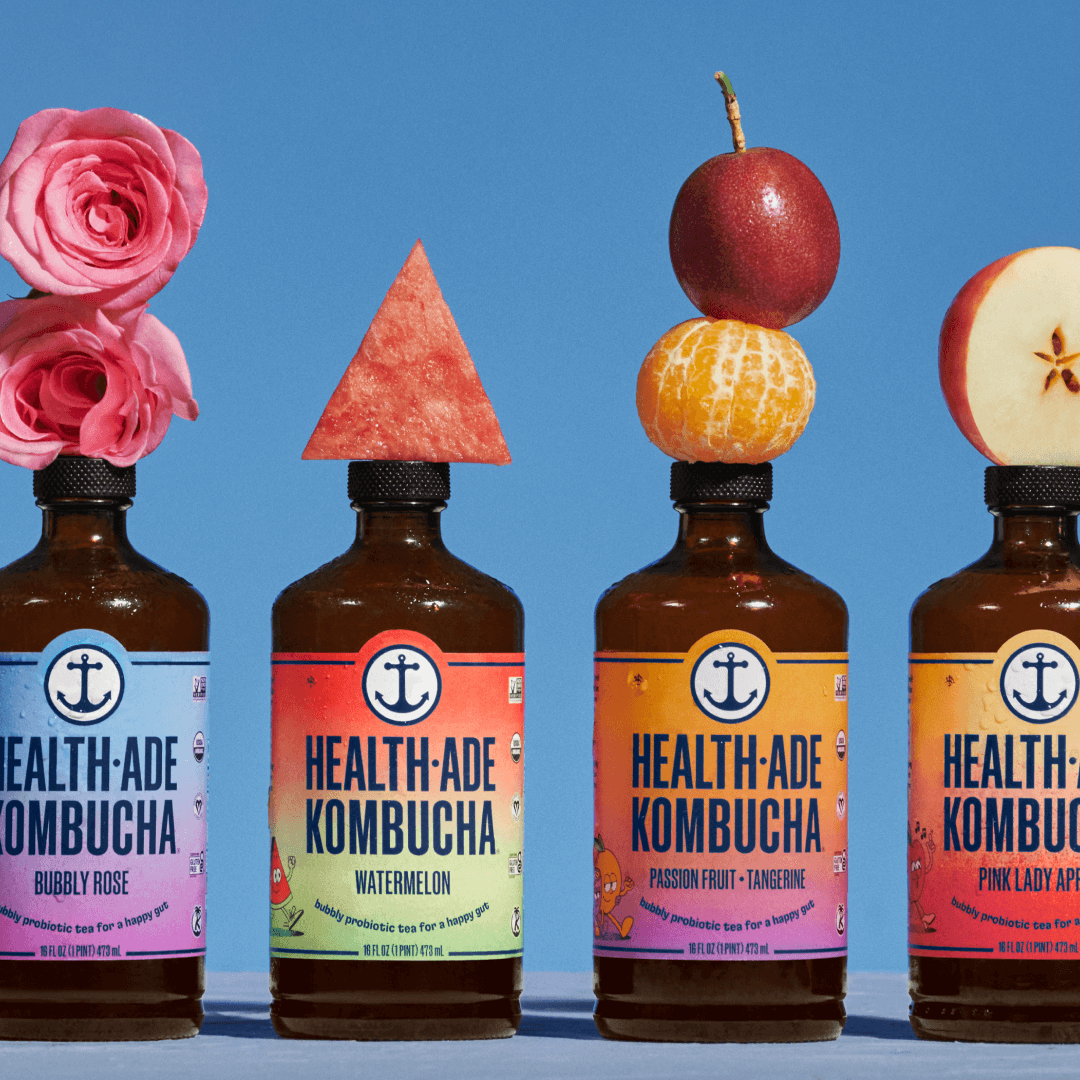
Health-Ade is brewed in Los Angeles and contains organic fermented kombucha packed with probiotics and healthy organic acids which are known to support a healthy gut. Health-Ade has also launched 3 new product SKUS Health-Ade Plus, Health-Ade Pop (a soda alternative with prebiotics), and Health-Ade Mixers (probiotic alcohol mixers).
Brand mentioned
Graza
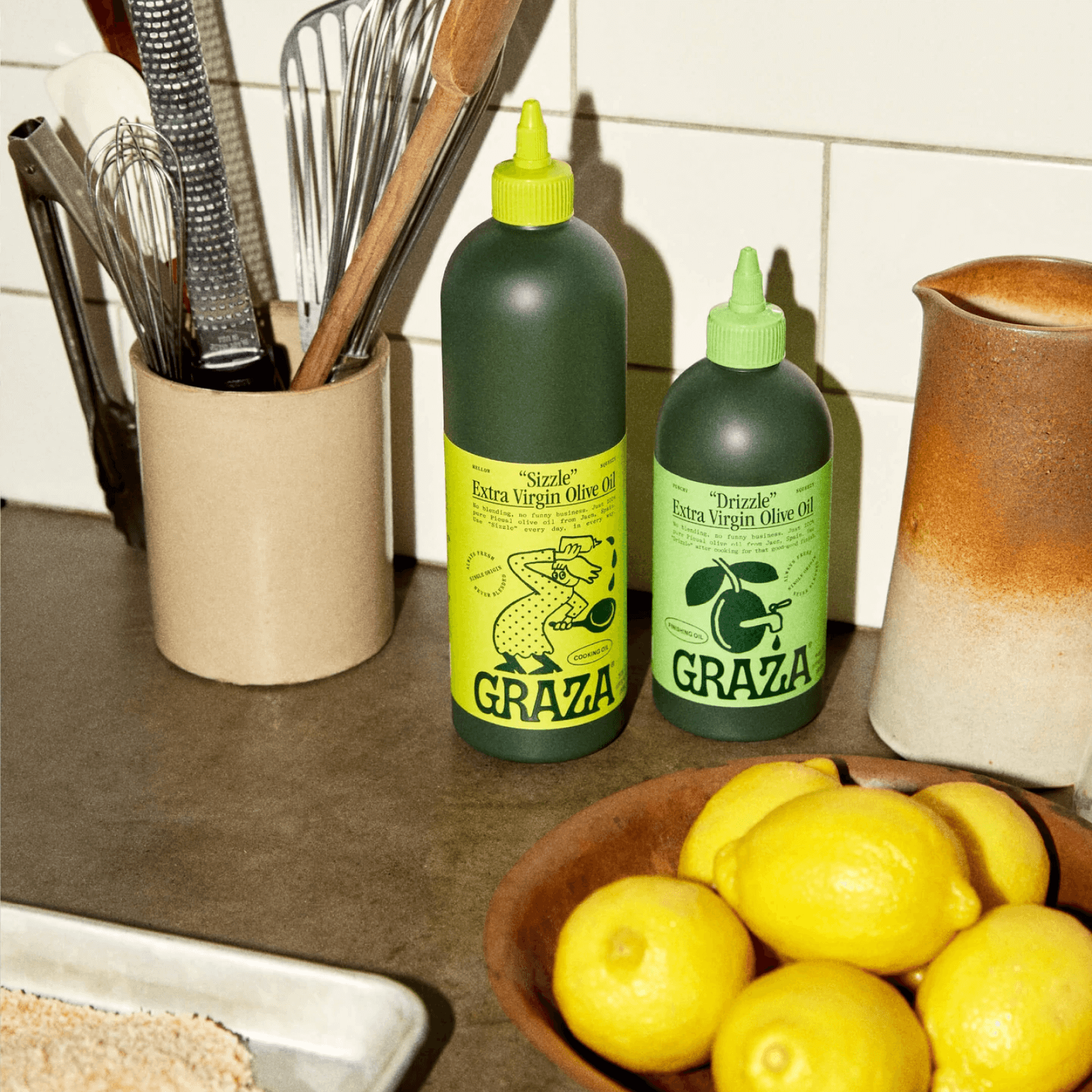
Graza is high quality olive oil that tastes as good as it looks and comes in an easy-to-use squeezable container. Graza has two types of oil: cooking oil and extra virgin.
Brand mentioned
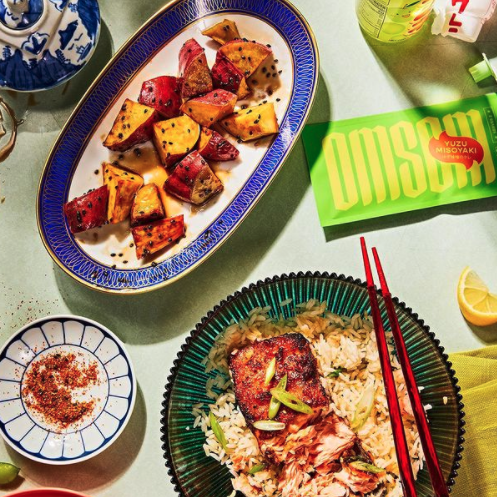
OMSOM
Omsom is here to bring proud, loud Asian flavors to your fingertips any day of the week, sitting in your pantry right between the tomato sauce and olive oil.
Brand mentioned
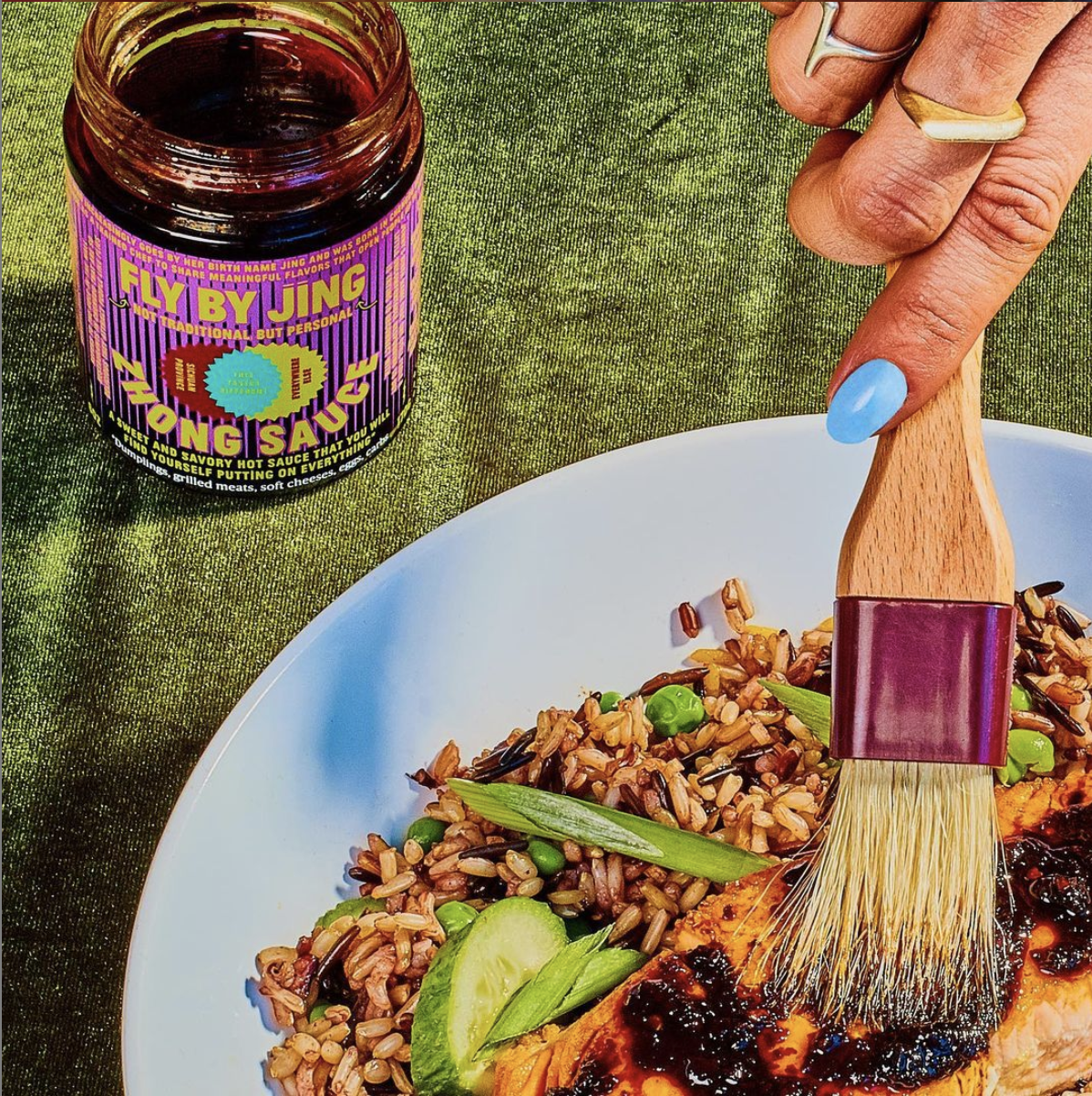
Fly by Jing
Fly by Jing offer artisanal Chinese product showcasing Sichuan’s prized tribute peppers in fragrant, umami-rich condiments.
You mentioned delivery was the toughest bit in D2C for you: Did you solve that in the end?
It's still something we're trying to unlock.
Part of the challenge is of course packaging and breakage because we've got a glass bottle. So having thicker, more sturdy packaging would benefit us immensely, but that also costs more money.
And because shipping costs so much money, D2C can quickly stop making sense. So that's a really big challenge. And if any entrepreneurs out there want to solve that packaging challenge for us - all entries are welcome!
What about last mile delivery options - are those useful to you?
We do have some great last mile delivery partners like Ohi that we have started working with who are helping bridge that gap, but the challenge with them is that we’re still relying on distributors to get our product to the last mile delivery hubs. And sometimes, a distributor may leave a crate of Health-Ade kombucha out in the sun for a little too long - and now you have spoilage. So it’s tricky.
Hmmm. Seems like a tough one to crack.
Yeah. If you've ever ordered wine online, you notice it comes in very sturdy custom packaging. So it can definitely be solved for - but what you don’t necessarily realize as a consumer is that you’re paying extra dollars for that packaging.
But for products like ours, that are readily accessible at retail, consumers don’t feel too happy to pay more than what they pay in-store via your eCommerce store. So we can’t charge MORE online, which means we get completely squeezed as we invest more into packaging.
What about Amazon Fresh or things like Thrive Market?
It’s still the same challenge. I love what Thrive is doing. And we’re only just starting to investigate how their solution might work for our refrigerated products. I'm rooting for them - they seem to be thinking about this smartly.
I want to shift gears and talk about the new age CPG brands. The Grazas, Omsoms, Fly by Jing’s of the world seemed to have cracked a beautiful D2C -> Retail model. What do you think about their approaches? If you had to start a CPG business today, would you do it the same way?
In short, yes. I’d follow a very similar approach.
Now, again, if I started a new refrigerated business, the challenges would still remain. But the benefit of starting DTC is that you have pricing on your side. I would charge a little bit more so that it made sense for the business. And then when it came time to sell via retail, I could start from a place of being a higher priced good.
DTC first is definitely the route to go though. You learn so much from your customers and you get so much information that you’d never be able to get in retail.
And if you’re lucky enough to grow real buzz, it becomes so much easier to get into massive retailers like Target.
To give you an example: It took 7 years to get into Target, and I have friends who have started businesses online much more recently than that and gotten into Target much faster than we did. That’s because Target understands that consumers are now discovering brands online, and shopping for them in-store. That's a shift from a decade ago.
My last question is this: In the Guy Raz podcast: You attributed 20% of your success to luck, and 80% to hard work. Let’s talk about the 80%: What did you get right?
At the very top of the list (and it's so high on the list that it almost doesn't count - it’s a price of entry): Your product needs to be extraordinary. If you don't have that, nothing else matters.
Next up is people. So much effort goes into getting products on shelves - And having a strong team has been such an important part of our success. If you break that “team” bucket even further, you gotta nail hiring, culture, identifying rockstars, keeping people motivated - those are all so important and unique in their own right.
And lastly: Brand. I don't think enough people focus on the why behind the brand and the emotional connection you’re building with the consumer.
The tough part about that is that your consumer may not even know why they’re purchasing your product. They’ll revert to hard facts like the ingredients, or the pricing. But there’s so much more happening in the subconscious. The brands that can connect on a deeper, more emotional level are the ones that can rewrite the rules.
Daina - thank you so much for chatting. Such a fan of yours, thank you for sharing your insights & good luck in the new role!
Join 17k+ subscribed
Get The eCommerce Pulse
The twice-weekly briefing for operators, founders, and partners shaping modern DTC.