1800Hotline 032 // $580M in the pancake aisle, $1.5M for beef tallow Doritos, and a chef that launched with three products
Zach Bingham is focused on building one of the strongest communities in commerce as the CEO of 1800DTC. Based in Utah, he brings his expertise and knowledge from working closely with brands and across leading platforms and agencies.
Hey DTC fam,
PepsiCo paid $1.95B for Poppi a bit over a year ago. Its own finance team has now walked the odds on the earnout down to roughly a coin flip, for a second time. It’s the closest thing our industry has to a live scorecard on what actually happens to a DTC brand post-exit. We break it down.
Also when you scroll below: a cookie mix brand now sitting on the shelves in Target, Kroger, and Albertsons without ever raising a dollar, and an olive oil brand that is built around a single early harvest from a single Greek island. Opa!
Let’s get into it.
Connect w/ the 1800DTC Community

This edition is presented by DOSS.
AI: Already Moving Carts (in a big way).
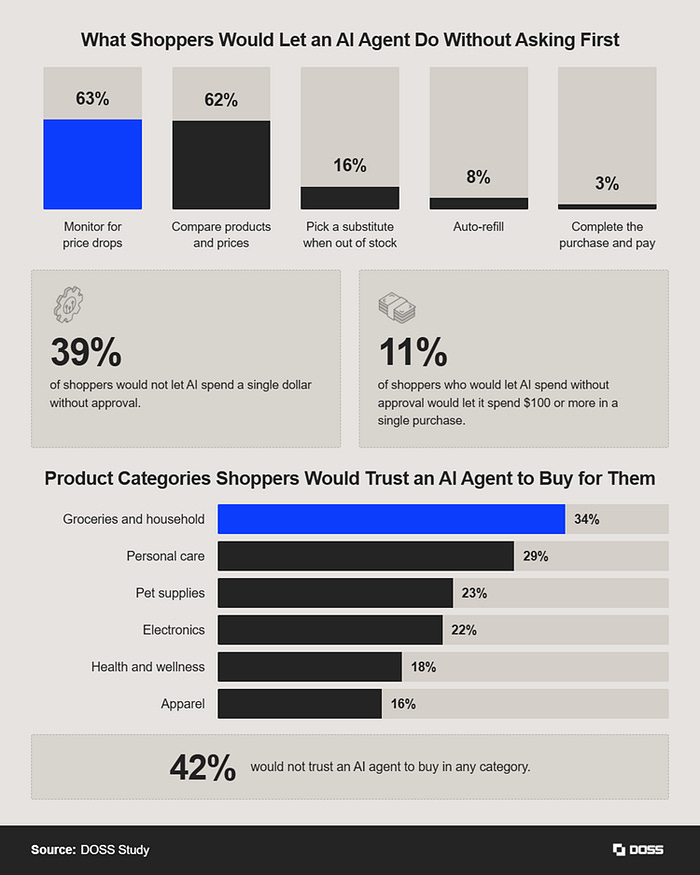
There’s some new research from DOSS: 1,000 shoppers surveyed, 500 retailers audited.
-
18% have switched brands on an AI’s recommendation
-
Among Gen Z, that number’s 26%
Only 6% would let an agent check out unsupervised, but 77% will let one research and compare. Meanwhile, 1 in 10 CPG brands block the crawlers behind ChatGPT and Claude on their own sites. Marketplaces come in worse at 23%.
DOSS is THE operations platform for consumer goods brands scaling $10M to $200M. Their customers include Verve Coffee Roasters, De Soi, Mezla, and Spread The Love. All repeat purchases, which is where agents start: 34% of shoppers would hand over groceries and household goods, topping all the other categories.
Dive into the research here, or connect with the DOSS team below to talk through what this means and what their AI-native platform can do for managing your growing brand in real time. They’re great friends.
Grab some time with Evan from DOSS
Brand Feature: Magic Molecule
Magic Molecule has landed at Walmart. The hypochlorous acid skincare brand announced this week that its bestselling Daily Skin Spray is now in more than 4,500 Walmart stores and on Walmart.com, pushing total footprint past 16,500 locations.
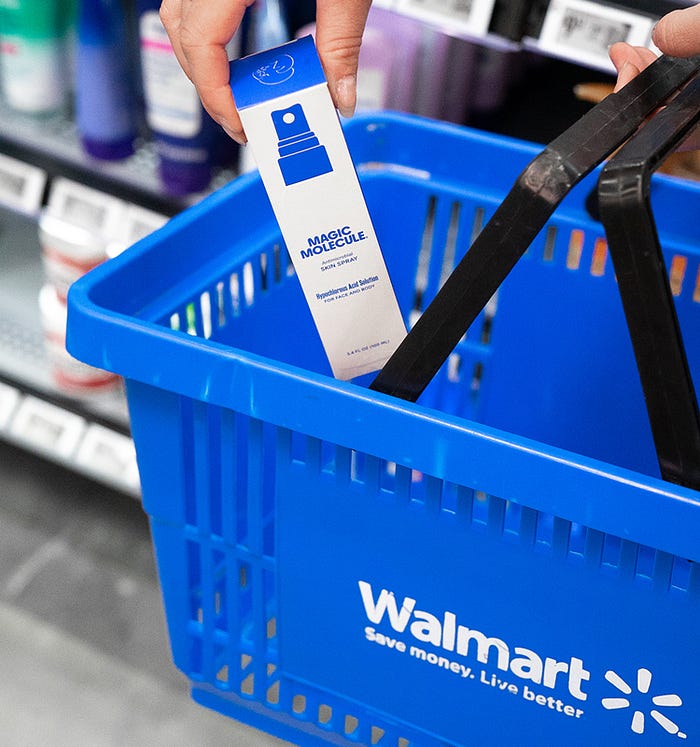
Courtesy of Magic Molecule
Quick primer if it’s new: hypochlorous acid is something your white blood cells already make, and it’s actively used in clinics. Magic Molecule’s FDA-cleared spray puts it to work on more than fifty everyday skin concerns, from breakouts and rashes to cuts and sunburn. Plus, it’s gentle enough for one month and up.
“Innovation only matters if people can access it. Walmart has long been the destination where millions of families turn to for trusted products at an exceptional value, making this a meaningful milestone not only for Magic Molecule, but also for the growing hypochlorous acid category as more consumers discover its everyday benefits.”
Justin Kerzner, co-founder and CEO of Magic Science Corporation.
The Walmart launch follows recent expansions into Whole Foods, CVS, and Sprouts. Magic Molecule has seen some exciting momentum as hypochlorous acid becomes one of skincare’s fastest-growing categories.
-
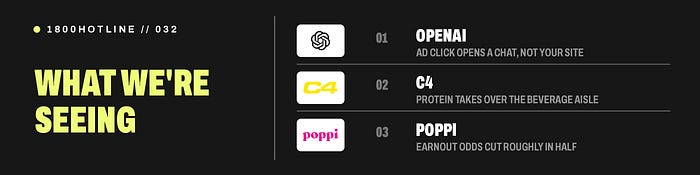
OpenAI is testing an ad format where the click never leaves ChatGPT. A campaign type called Agent showed up inside ChatGPT's Ads Manager for a small group of advertisers. Instead of clicking through to your site, the shopper drops into a conversation with an agent assembled from your product feed, your reviews, your support docs, and whatever else OpenAI crawled off your pages. AI tools still lag behind search, with independent estimates putting ChatGPT ad CTR around 1.3% against roughly 29% for Google Search, but worth keeping an eye on.
-
Protein continues taking over the beverage aisle. C4 pushed past energy into sparkling protein this week, and Free Rein also launched its first RTD protein coffee with a chainwide Walmart placement headlining it. We’re seeing two very different brands arriving at the same conclusion at the same time. It’s more of the trend of protein being bolted onto whatever people already eat or drink. If you sell a beverage and have not been asked about your protein SKU yet, I would be surprised.
-
PepsiCo has marked down the odds on Poppi's earnout twice. Better than 90% likely at close, versus roughly 40% now, according to the buyer's own books. Nobody outside a deal ever gets numbers this clean on post-acquisition performance. We have to dive deeper into this one…
Big Story: Poppi’s earnout is telling on itself
When PepsiCo closed the Poppi deal in 2025, the headline was $1.95B, or $1.65B net of anticipated tax benefits. Attached to it was a separate performance earnout with a $300M milestone bonus riding on it.
The earnout serves as a liability the buyer has to carry on its balance sheet and revalue every quarter based on how likely the payout looks. It is a public running, mark-to-market opinion from the acquirer’s own finance team about whether the brand they just bought is hitting plan.
At close, PepsiCo carried it as better than 90% likely.
After Q1 2026, the liability was written down to $162M. After Q2, it sits at $116M against that $300M milestone, which puts the implied probability somewhere near 40%. In two quarters the buyer’s own accountants went from near-certainty to a coin flip.
The commentary around it has moved the same direction. Ramon Laguarta said in April that the business was starting to accelerate. On the Q2 call, management did not repeat its earlier projection that Poppi would be a meaningful contributor to organic growth in the back half of the year.
To be clear: none of this means prebiotic soda peaked or that Poppi is in trouble as a brand. Q1 had distribution problems as PepsiCo moved Poppi into its own system. The shelf resets can take time. But it is worth looking at a wider picture. The thing that made Poppi worth two billion dollars was digital-native brand building, owned demand, and cultural velocity that legacy beverage companies have a had time manufacturing. That’s what made it a get for PepsiCo. The thing that got in the way was a distribution transition run. There is also a margin problem underneath it: Poppi’s gross margins were estimated in the 40s to low 50s against PepsiCo’s mid-to-high 50s, so right now, selling more Poppi actually drags down PepsiCo’s overall profit margin. That’s until there’s some cost reduction.
What this tells operators, especially anyone with an exit conversation on the horizon: the earnout is a bet on the acquirer’s execution, not yours. The day you sign you hand over everything that leads to the results you no longer control.
Price the deal as if the earnout never pays, and negotiate the milestones against inputs you can still influence rather than revenue the buyer will be operating.
→ More
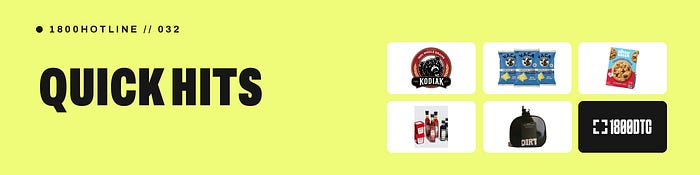
Kodiak has doubled the business under L Catterton and crossed $580M in retail sales. There was no blitz scale, no category land grab, just steady expansion out of pancake mix into oatmeal, bars, and frozen. With it is now closing the gap on legacy brands in several aisles at once, it’s an interesting case worth looking at if you’re courting a growth equity partner. → More
Vaca raised $1.5M from BAM Ventures and a group of angels on a beef tallow tortilla chip. Seed oil free, cooked in tallow, in mouth-watering flavors like Cowboy Queso and Classic Ranch. The seed oil conversation has officially left wellness discourse and landed in the snack aisle, and Vaca is chasing the flavor-forward shopper instead of the clean-eating one. Selling someone a craving they already have and swapping the fat is a much easier ask than getting anyone to change their diet. → More
My Better Batch launched in 2024 with no outside capital and is already in Target, Kroger, and Albertsons. We love this one. There’s no round, no bridge, no dilution. There’s a cookie mix and a series of buyer meetings. Most founders sequence it the other way and raise first so they can afford to chase national retail. This proves that does not have to be a rule. → More
Chef Esther Choi launched Sessy with exactly three products in it. Soy sauce, sesame oil, and gochujang, all made in Korea with Sempio, one of the oldest food companies in the country. A Food Network name could have shipped a fifteen SKU line and gotten shelf attention on the strength of the face alone, but three foundational staples makes the brand about the pantry instead of about the celebrity. Probably harder launch given the restraint, but caters to longevity. → Shop Sessy
Dirt is a new olive oil brand built around one early harvest on one island. Organic, single origin, extra virgin, pressed in beautiful Crete, sold in a 500ml bottle that looks unique against the competition today. Olive oil is one of the last big pantry categories where almost all the shelf is private label and commodity blends, and the high polyphenol conversation is doing to it roughly what single origin did to coffee fifteen years ago. The packaging alone will probably get it picked up. It’s available exclusively via Amazon UK for right now. → More
Event Roundup
Hosting TWO in one day, in Denver | Wednesday, August 19
Newtopia Now runs August 18 to 20 at the Colorado Convention Center, and the show floor opens on the 19th.
CPG Friends Coffee | 1800DTC and ExpressCheckout | 7 to 10 MT A casual coffee before the floor opens. It’s going to be all our CPG friends in one room getting caffeinated before a long day of walking a convention center. Superfiliate is covering the morning, which we appreciate. Invite’s open!
Denver Ecomm Fam Happy Hour | 5 MT Same day, opposite end of it. Once the floor closes, come decompress with the ecomm crowd and let’s talk about how the day went.
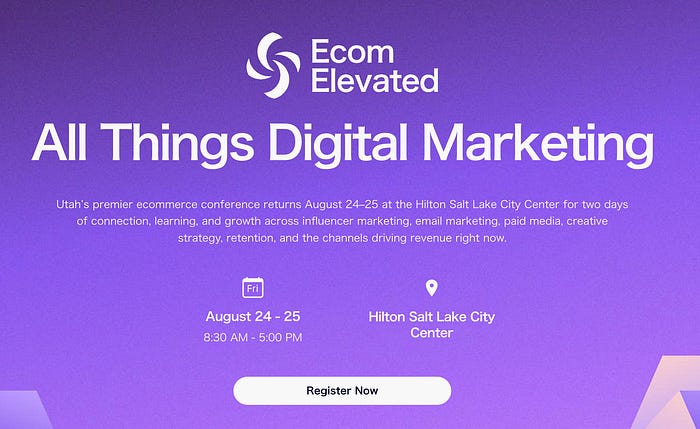
Ecom Elevated Fall | Commerce Catalyst | August 24-25 | Hilton Salt Lake City Center
This one’s right around the corner (in my backyard, and with how fast it’s approaching). It’s just three weeks out. Matt and the Commerce Catalyst crew have turned Ecom Elevated into the thing that pulls the entire Utah ecommerce community into one room twice a year. He has honestly been a pillar of this community for a long time. The best.
The fall lineup is built around stuff you can use: Sarah Levinger on the psychology behind why people actually buy, Jordan West on TikTok Shop, a keynote called The Playbook for Showing Up in ChatGPT, and creator matchmaking where hundreds of creators come to meet brands face to face. There is also a female founder pitch competition.
If you are in Utah, come. If you are outside Utah and have been thinking about this market, come. Seriously. These two days can the fastest way to meet the whole ecosystem. And if any of our partners want to run a coffee meetup, host a dinner, together, or some type of activity around this, reply and let’s get something going.
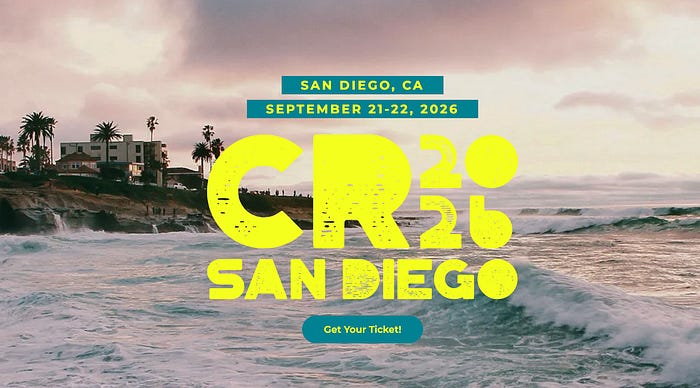
Commerce Roundtable | San Diego | September 21-22 | Port Pavilion
Hands down one of my favorite conferences. Two days on the waterfront at the Port Pavilion, 750 curated attendees, and a 3 brand-to-tech ratio. It all works so well. It was built by Jimmy Kim, Nick Shackelford, Chase Dimond, and Taylor Holiday specifically to fix what they hated about every other event they had been to, which means the content is tactical and data-driven instead of obvious product demos. Fourth year running, and 10/10 from the people who actually attend.
If you are a brand, you should be there. If you are a service provider, I would look hard at sponsoring this one. Brand tickets are $450, and there is $100 off brand and agency tickets with code 100OFF through August 15. Want an intro to the team? Reach out and we can make it happen.
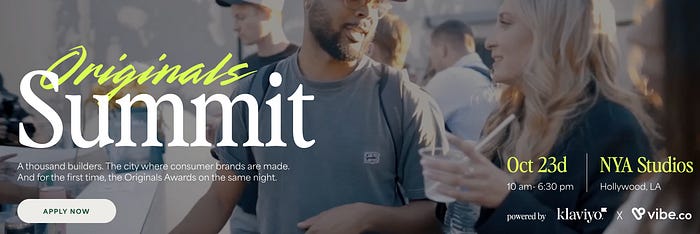
Originals Summit | League of Originals | October 23 | NYA Studios, Hollywood
Shout out to my friends at League of Originals. Karolina Swietoniowska is one of the most impressive event producers I have ever met, and the production quality that she puts on plus the curation of who is actually in the room is why people keep going back. October 23 is the big one: a thousand consumer brand builders in LA, main stage plus masterclass tracks, and the first ever Originals Awards (nominations open August 10th). It’s all happening on the same night.
Speaker roster is still dropping, but the community behind it represents north of $26B in annual revenue.
Get in early because it’s application only. Brand builder early bird is $125 against a $350 list price, so recommend taking advantage of that. Same read as above: brands should attend, service providers should be looking at what they can do on the sponsorship front around this.
Also worth your RSVP…
The Consumer Brand Cup | Thursday, August 6 | Millbrook Estate, Austin | 4 to 10 CT — Founders League and Isagani Yorke Capital Partners running a single-elimination pickleball tournament with a curated CPG showcase bolted on. There are booths available if you want product in front of those in the room.
Yappy Hour | Tuesday, August 11 | 6 to 8 ET — Zoe Kahn and Robyn Nissim pulling together founders, brands, creators, and agency folks. There’s no panels or pitches (which is kind of a pitch in itself).
Charleston Commerce Collective | Thursday, August 20 | Taco Boy downtown, Charleston | 6 to 8 ET — Back from summer break for the local ecommerce crowd.
Consumer Perks | Brooklyn | monthly — Morning coffee with the New Edition team for founders, operators, marketers, and investors. Approval is required for this one.
That is Signals for Issue 032.
If you have ever signed a deal with an earnout attached, I want to know whether it paid. My read is that most of them probably do not, and almost nobody ends up talking about it publicly. Am I wrong? Hit reply.
See you Thursday.
— Zach and the 1800Hotline Team
Find a partner, tool, or agency: 1800DTC.com
Get connected with our partners: Brand Form
Join 17k+ subscribed
Get The eCommerce Pulse
The twice-weekly briefing for operators, founders, and partners shaping modern DTC.