How To Build Healthy, White Hat Backlinks For E-Commerce Businesses

Matthew Buxbaum is a former web content writer and growth analyst for 1800DTC. If he's not at his desk researching the world of SEO, you can find him hiking a Colorado mountain.
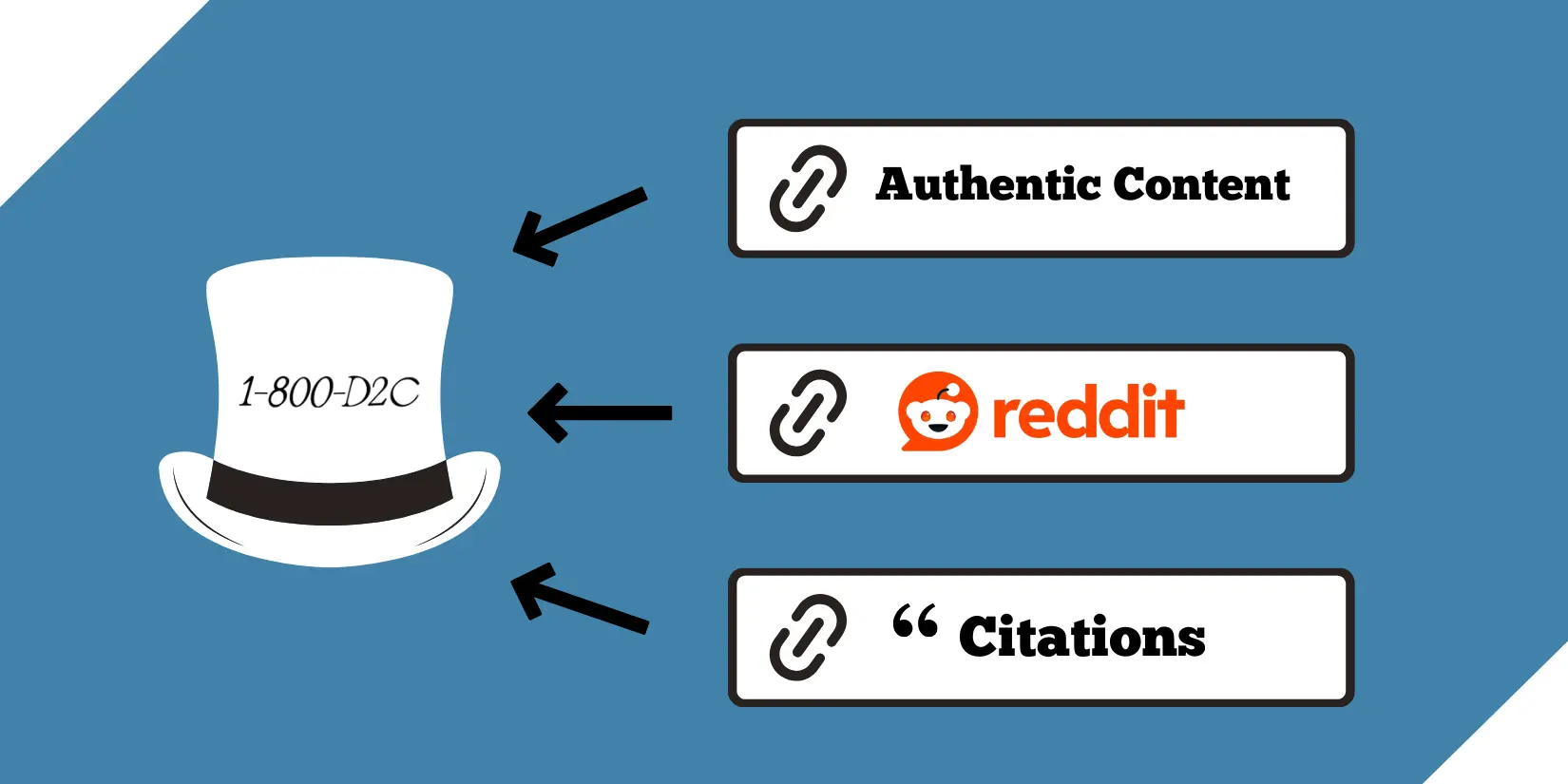
There are too many guides out there to count and all of them promise to "boost rankings," or "send you to the top of AIOs," or "position 1 rankings!" If you simply follow their backlink linking playbook. Backlinks, which are anchors from another website that link back to your domain, are a critical component of white hat SEO and a key factor in ethically and sustainably boosting your D2C brand's authority on the web.
But, how do you get them? How do you implement them safely? And how do you continuously grow your profile of diverse, referring links for your niche e-commerce business?
What Are Backlinks and How Do They Boost My E-Commerce Website Visibility?
Backlinks refers to the practice of an inline hyperlink on a website (that isn't yours), which then links off of that webpage onto your website. So for example, this link here to Google's backlink best practices, is a prime example of a backlink in action. We are creating a link from 1800d2c.com to Google's document. This has now provided a healthy backlink to Google's own support forms concerning anchors from a third-party source best practices!
This SEO tool helps your website by:
- Sending "link equity" or "Google juice" from one brand's/website's domain to yours, helping to increase your domain authority, loosely recognized as DA.
- Providing a "vote of confidence" from one website to yours, and helping to send trust signals and build a web of trust across the internet.
- Assisting to slightly increase traffic by allowing a route off one website to your website.
A great analogy for backlinks in Google's eyes:
Imagine you're friends with everyone in the neighborhood (the world wide web and its websites), you go around your neighborhood and enter people's houses after being invited in (domains/websites), after visiting many homes, you see on their refrigerators magnets to menus (articles/resources) of a local restaurant in town (backlinks). Those multiple references you keep seeing on your neighbors refrigerators to a local restaurant look very inviting — perhaps, you'd like to order from there? Perhaps, Google would too!
That's how anchors from referring domains should operate in practice. Every time you receive a backlink, Google and your fellow neighbors begin to trust you more!
The Healthiest (And Safest) Ways To Build Backlinks For Your E-Commerce Website in 2025
Backlinks are hard to get and incredibly easy to do improperly. Whatever you do, never pay for referring links in bulk, and try to never pay for them in general. Build them organically (naturally) by launching your D2C brand on the internet and across multiple platforms.
Build It And They Will Come: Great Content Naturally Bolsters Backlinks
People link to your website and articles when they use your content to explain their own. Whether it's an article, video, or image, creating content that satisfies a user's query, informs the reader, and offers exceptional (new, fresh, non-AI generated) exposition, drastically increases the chances of that article, blog, or website receiving a backlink simply because it exists.
The quickest, safest, and easiest way to build link equity from other websites is to create irresistible content that other websites wish to link to in their own content.
Stray Away From Guest Posting If Feasible
Guest posting definitely falls into a gray hat SEO area: Paying another website to post authoritative content on their website, and within that content, you have a link going back to your e-commerce website's article or domain. While not outright spammy, there are better ways to do this:
- Offer expert insights and opinions for journals and publications (the backlink is earned).
- Provide a service, and ask the client or customer to publish a verified, factual case study linking back to your domain.
- In the same vein, ask to collaborate on a project or research task with another website and link between each other.
This method of backlink building maintains authority, integrity, and builds backlinks safely.
There Are Reputable Listing Websites For Your E-Commerce Website...Like Us
Another fantastic method for building backlinks is finding reputable, safe directories like the one offered for listing your e-commerce web tool at 1-800-D2C. Our goal is to provide transparent, comprehensive, and holistic information regarding competitors marketing and e-commerce flow tech stacks. We can only do that by gathering unique yellow-pages like info from brands, tools, and agencies look to list with us. By building a tool profile, you help to safely build a backlink for your brand.
Often Overlooked: Social Media Platforms
For most e-commerce SEOs, there is a ton of debate regarding whether or not social media and influencer platforms offer a viable outlet for backlinks. While links off of YouTube, LinkedIn, Instagram, TikTok, Reddit, and Facebook might not be followed, any brand reference anchor is a good brand reference anchor. Building these social media profiles helps to a) create a profile link back to your domain and b) offer an opportunity for soft backlinks and brand mentions.
A few notes on doing this segment the right way:
- Only build soft mentions and brand anchors/backlinks on platforms you will actually use to increase your brand's reach to your audience — don't make them just because.
- Adhere to that platform's terms, conditions, and guidelines — for Reddit, actually create meaningful, organic (not AI) commentary assisting other users.
- Don't link spam on the platform you use, in fact, sometimes just stating your brand in plain text can be a potent way of building authority.
Soft Brand Mentions: New Age SEO Authority Tactics
The jury is still out on whether "Soft" anchors and brand mentions across platforms offer uplift to your organic web visibility. At 1-800-D2C we believe it does help, and at the very least, it can't hurt. A soft anchor is a segment of text or comment mentioning your brand name without the anchor link. There is evidence to suggest that Google's semantic ranking algorithm can recognize this behavior and help boost the trust your e-commerce website receives.
As Always, Backlinks Need To Be Part of Your Workflow
At the end of the day, backlinks aren’t a hack, they’re a habit that needs to be ethically and appropriately integrated into the techniques for building your e-commerce website. The brands that win into 2025 and onward will be the ones that play the long game: Creating content worth linking to, earning authority through trustworthy links, and showing up on the right platforms, for the right reasons, for the right audience.
If you treat backlinks as a byproduct of building genuine value for your consumer, rather than as a shortcut to game the system and skyrocket rankings, you’ll not only grow your e-commerce brand’s visibility but also protect it from the volatility of (the extremely frequent and turbulent) algorithm updates. Build for humans first, search engines second, and the backlinks will follow —and so will your authority and trust!
Frequently Asked Questions for How To Build Healthy, White Hat Backlinks For E-Commerce Businesses
What Are Backlinks And How Do They Boost E-Commerce Website Visibility?
Backlinks refers to the practice of an inline hyperlink on a website (that isn't yours), which then links off of that webpage onto your website. This SEO tool helps your website by sending "link equity" or "Google juice" from one brand's/website's domain to yours, providing a "vote of confidence" from one website to yours, and assisting to slightly increase traffic by allowing a route off one website to your website.
What Is The Safest Way To Build Backlinks In 2025?
Backlinks are hard to get and incredibly easy to do improperly; whatever you do, never pay for referring links in bulk, and try to never pay for them in general. Build them organically (naturally) by launching your D2C brand on the internet and across multiple platforms.
Should I Use Guest Posting For Backlinks?
Guest posting definitely falls into a gray hat SEO area. Offer expert insights and opinions for journals and publications (the backlink is earned), provide a service and ask the client or customer to publish a verified, factual case study linking back to your domain, and ask to collaborate on a project or research task with another website and link between each other.
Do Social Media Platforms Help With Backlinks?
While links off of YouTube, LinkedIn, Instagram, TikTok, Reddit, and Facebook might not be followed, any brand reference anchor is a good brand reference anchor. Building these social media profiles helps to a) create a profile link back to your domain and b) offer an opportunity for soft backlinks and brand mentions.
What Are Soft Brand Mentions?
A soft anchor is a segment of text or comment mentioning your brand name without the anchor link. There is evidence to suggest that Google's semantic ranking algorithm can recognize this behavior and help boost the trust your e-commerce website receives.
Join 17k+ subscribed
Get The eCommerce Pulse
The twice-weekly briefing for operators, founders, and partners shaping modern DTC.