How to Build a High-Performance Email Welcome Series for D2C E-Commerce Brands
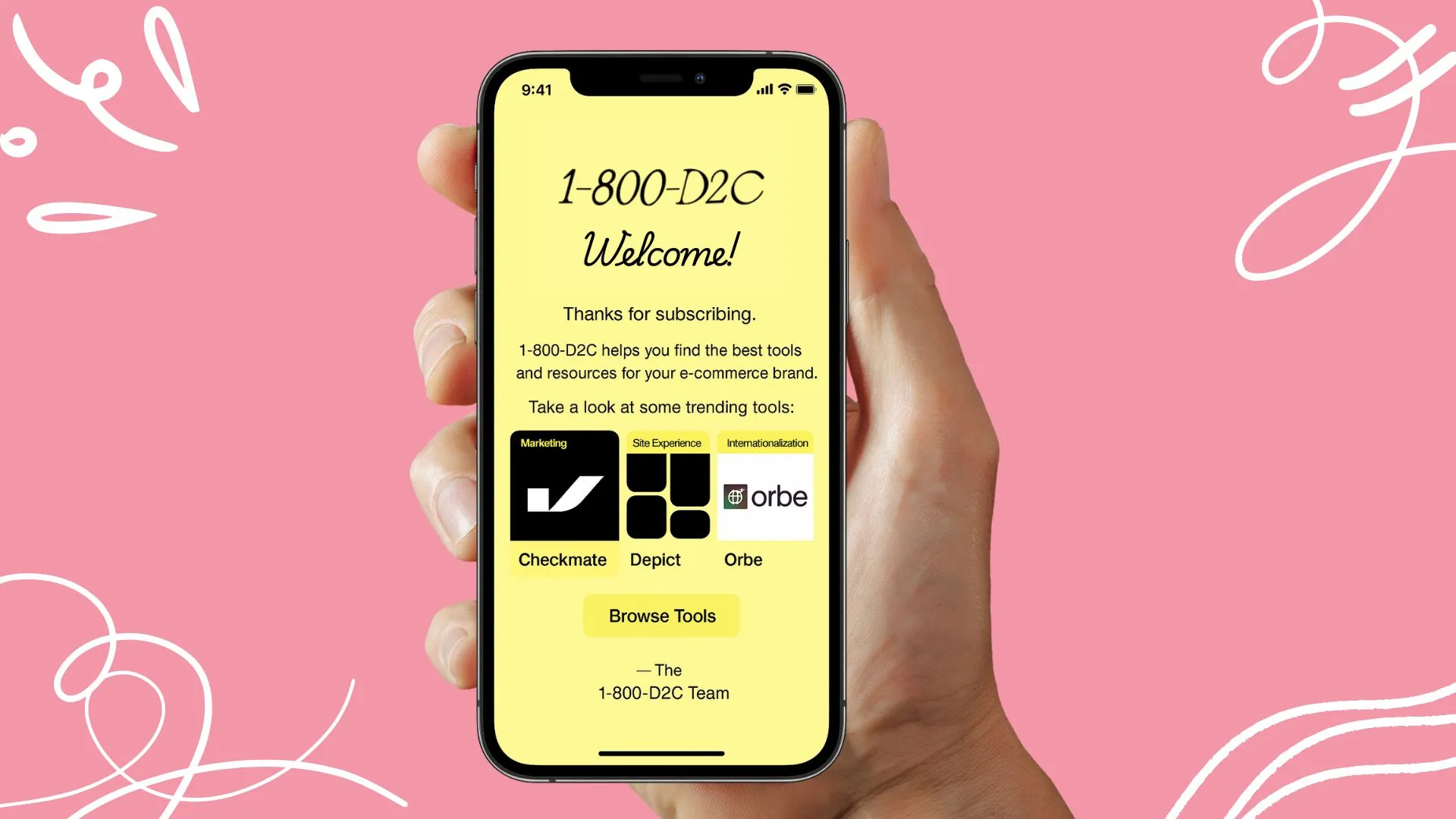
First impressions aren’t just digital courtesies, these elements compound, fast, into measurable revenue for D2C brands. A high-performance email welcome series is the workhorse of modern e-commerce onboarding: it builds trust, collects critical data, and converts intent into cash (or account activation).
As a brand operator, here's what you need to know: Most brands still send little more than a coupon and “welcome!” subject line, unconsciously leaving lifetime value on the table.
If you’re tired of watching welcome flows under-deliver, it’s time to look under the hood and reengineer the fundamentals. Let’s build a brand playbook designed for D2C operators who want more than just open rates: they want loyalists, insights, and actual results.
Why a Strategic Welcome Series Is Non-Negotiable for D2C Brands
Welcome emails represent a rare opportunity in e-commerce analytics. The data makes this clear:
- Open rates average 51% (nearly 2x routine campaigns)
- Industry leaders see click rates as high as 15%
- $2.35 revenue per new subscriber is possible—if your series pulls its weight
- Nearly all “welcome” sales happen inside 10 days (miss that window, and you’re lighting CAC on fire)
More than numbers, a thoughtful welcome series accelerates zero and first-party data collection, sets communication norms, and establishes a personalized baseline for every future send. It’s not about “being nice.” It’s seizing the rare moment your audience actually wants to hear from you.

Tool mentioned
Klaviyo
Klaviyo is a marketing platform that provides email marketing tools for ecommerce businesses. It connects to online stores and enables customer segmentation based on purchase history and customer preferences.
The DNA of a High-Performing Welcome Email
Timing is Everything with Email
- Send immediately—always within the first 24 hours
- Brands that delay often lose the momentum (25% lag, missing out almost entirely on initial conversions)
Subject Lines That Actually Work
- Use your brand name or specific product hooks
- Limit to 7 words, emoji-inclusive, to boost scannability
- Personalize with the subscriber’s name when possible
- Test curiosity angles, but don’t sacrifice clarity
- Example: “Welcome to LemonLab: Where Should We Start?”
Personalization That Goes Beyond First Names
- Reference the exact signup source (“You joined us via our Summer Pop-Up!”)
- Call out their interests or preferred product category
- Deploy dynamic content modules: highlight shoes for shoe people, skincare for skincare people
- Recognize how they first found you (Instagram? Referral code?)
Calls To Action That Pull Your Consumer In
The most actionable welcome emails don’t push a discount code as the default. Instead a high-performing welcome-email series:
- Make your desired action front-and-center
- Experiment with CTAs beyond “Shop Now”—think product quizzes, micro-interests, or valuable content
- Play with urgency, but skip the desperation (“Take five for yourself and get 15% off” beats “Limited time!” for new customers)
Building a Welcome Series That Converts: Best-Practice Structure
Done right, a welcome series is a phenomenal D2C onboarding sequence, a micro-motivator, and a mini-conversion funnel. The goal? Guide new subscribers stepwise. Ensure you never overwhelm your audience, and always reach out with values-first intent behind your series. Here’s a high-yield structure for D2C:
- Email 1: Introduce your brand, instantly deliver any promised lead magnet, and set clear expectations. Lead with warmth, not corporate stiffness (“Thanks for joining, Maya 🙌 Let’s build something epic together”).
- Email 2: Identify the subscriber’s core challenge—why they signed up—and position your best solution. Give them a “coaching” moment: praise their decision, connect that pain point to a clear win.
- Email 3: Show empathy and credibility by sharing a relatable setback—yours, a customer’s, or even a “near-miss” story (à la the notorious Reddit LEGO drama). Vulnerability here is more than a “trend”—it invites real replies and boosts trust.
- Email 4: Paint possibilities. What does their transformation look like post-purchase? Break it down into steps. Highlight milestones (fast wins + long-term vision).
- Email 5: Bring it home—summarize your brand’s value, hit them with a direct CTA (not just another coupon), and layer in risk reversal (“Try it risk-free for 30 days”).
- Email 6: Cement confidence with testimonials, customer spotlights (especially from under-represented users), or case studies. Offer an upgraded incentive for those on the fence. Peer proof and applied FOMO go further than a cart timer.
10 Advanced Tactics That Quietly Outperform Everyday Email Flows
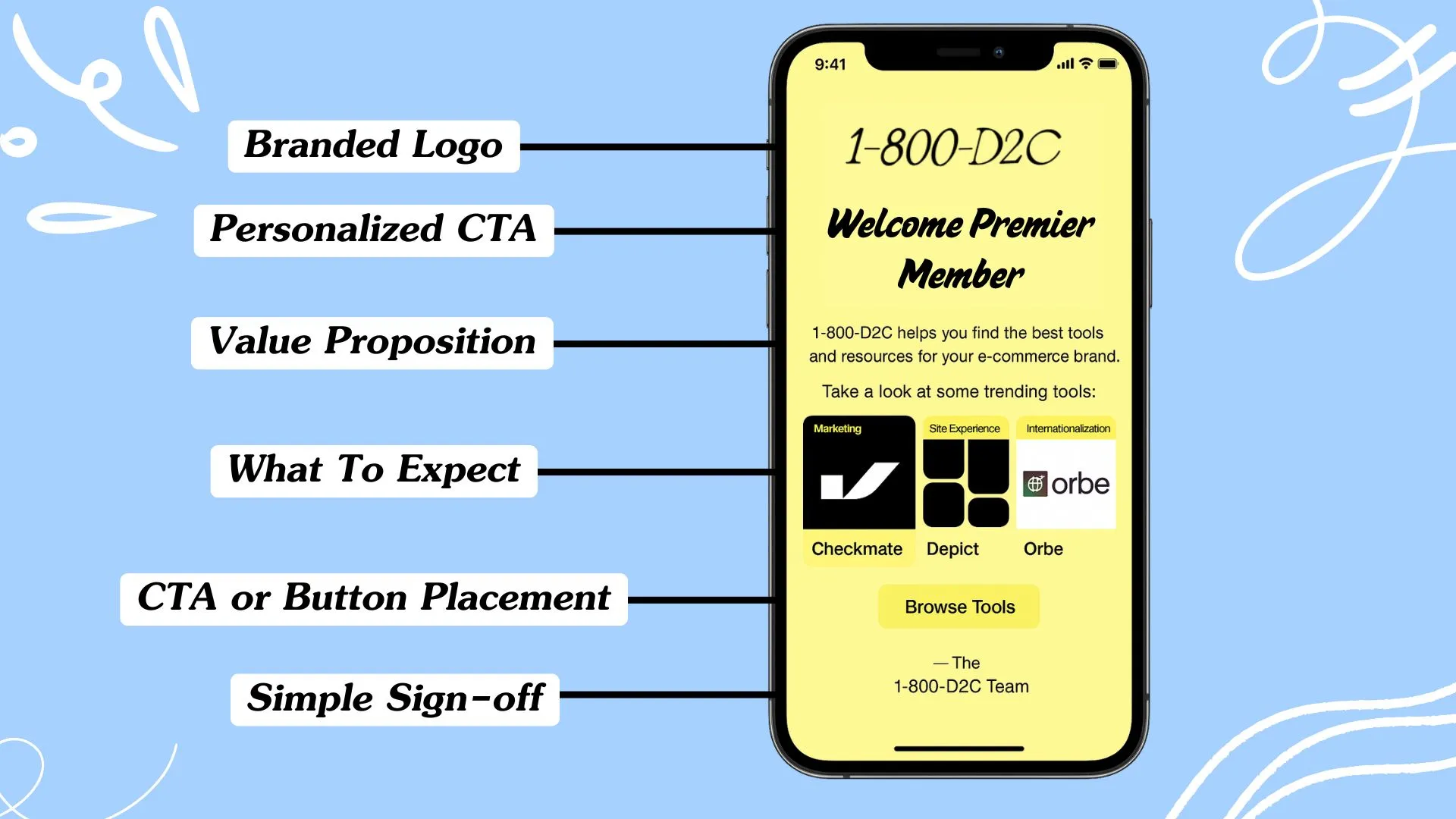
The Elements Of An Appropriate E-Commerce Welcome Email
Nothing should be bland about a D2C welcome email series meant to acclimate and integrate your target consumer into your D2C brand. Power users deploy creative touches that drive results well beyond the “Hey! Here’s 10% off” template. Need inspiration? We distilled the most impactful (and often overlooked) strategies into a must-try list:
- The Second-Chance Trigger: Resend your first email—but only to non-openers, 48 hours later, with a brand-new subject and preview. This simple move can boost aggregate opens by up to 12%—without spamming engaged users.
- One-Click Segmentation: Embed a micro-survey in Email 1 (“Pick what describes you best”). Each click tags their preferences, giving follow-ups personalized context and reducing unsubscribes by up to 20%.
- Story of a Near-Miss: Share a quick brand “failure and recovery” anecdote—unexpected authenticity increases both replies (up to 10%) and unsubscribes-for-insights replies.
- Representation Spotlight: Quote real customers from diverse segments in Email 2. Seeing themselves reflected builds trust and can literally double profile or account-completion behaviors.
- Prime & Ditch Subject Lines: Prime with gratitude, ditch formal “brand-speak.” “Welcome, Emma!” outperforms “Your subscription’s confirmed”—expect 5–7% higher opens.
- Visual Proof-in-Motion: Use a looping GIF that demonstrates your product’s durability, measurement, or functionality. Transparency here can spike add-to-cart rates by around 17%.
- Early-Stage Myth-Buster: Make Email 3 a myth-busting Q&A: address the three top worries new customers have heard. Preemptive honesty means fewer support tickets and more trial-to-paid conversions.
- Dynamic Reading Paths: Swap out a section in each email based on the user’s segmentation tag (from that micro-survey). Even basic AI personalization sustains high click-through across the flow.
- Founder’s 60-Second Voice Note: Embed a casual audio greeting from your founder. D2C feels human when there’s a real voice, not just another clever line of copy.
- PTO (Permission To Obtain) Prompt: Instead of urgency, use self-care language: “Take a five-minute breather and try our app—here’s a code.” Surprisingly, this “permission” CTA consistently outperforms classic urgency angles in new-customer cohorts.
Optimization, Measurement, and the Discount Debate
Even after launch, your work isn’t done. 74% of consumers now expect personalized experiences as the baseline.
And don’t let your welcome series get lost in a campaign jungle—exclude fresh subs from blast lists until they complete onboarding.
Beyond Email: Multi-Channel and Data Playbooks
Forward-thinking operators integrate their tone and branding for their welcome email series across channels and have expert analytics tools for their email campaigns:
- Sync with SMS—ask for preferences early and honor channel-exclusivity
- Use interactive elements (quizzes, preference centers) to collect richer, zero-party data
- Customize flows for different audience types: personalization isn’t just a filter, it’s a growth lever
Building a Foundation for Long-Term D2C Growth
A high-performance welcome series does more than nudge an initial purchase; it works to shape customer perception, preference, and pathway. By combining genuine storytelling, sharp segmentation, responsive design, and smart experimentation, you set your brand up to outpace the “set-it-and-forget-it” crowd.
For D2C agencies, founders, and teams, it means smarter revenue, higher engagement, and customer relationships that run deeper than a single discount code, email blast, or campy product offering.
With the right strategy, your welcome series transforms from an onborading checkbox to a community building tool.
Frequently Asked Questions for D2C Welcome Series
Why Is A Strategic Welcome Series Essential For D2C Brands?
Welcome emails are the analytics equivalent of a golden hour. A thoughtful welcome series accelerates zero and first-party data collection, sets communication norms, and establishes a personalized baseline for every future send.
What Structure Should A High-Converting Welcome Series Follow?
Done right, a welcome series is an onboarding sequence, a micro-motivator, and a mini-conversion funnel. The goal is to guide new subscribers stepwise—never overwhelming, always value-first.
Which Advanced Tactics Can Improve Welcome Series Performance?
Power users deploy tactics like the Second-Chance Trigger, One-Click Segmentation, myth-busting Q&As, and dynamic reading paths. These strategies quietly outperform standard flows by increasing engagement, replies, and personalization accuracy.
What Metrics Should You Track In A Welcome Flow?
Track open rates (51%+ is winning), click (15%), conversion (2–10%), and overall revenue per recipient. A/B test subject lines, offers, send times, and layouts for ongoing optimization.
Join 17k+ subscribed
Get The eCommerce Pulse
The twice-weekly briefing for operators, founders, and partners shaping modern DTC.