Behind The Tool: Kostas From VideoPoint

Marissa O'Halloran is the Commerce Lead of 1800DTC. When she's not researching and writing about the latest DTC products and brands, you can find her hunting down the best matcha in town, overpacking her carry-on, or hanging out with her golden retriever, Pepper.
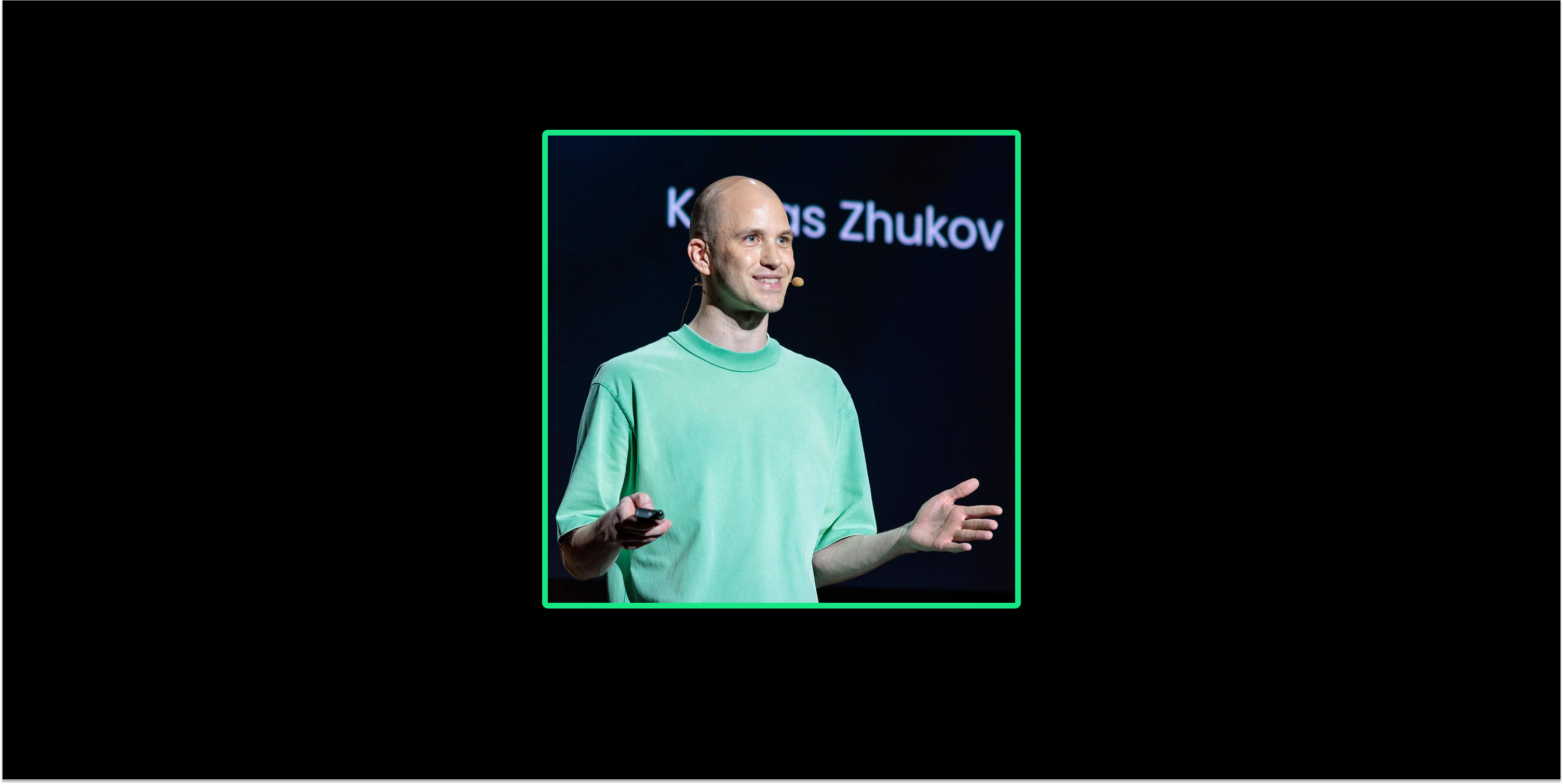
Fashion brands are spending more than ever on traffic and converting less of it. The content gap is getting harder to ignore: shoppers want video, but production is expensive, slow, and a logistical nightmare. That's the exact problem Kostas Zhukov set out to solve.
Kostas is the founder of VideoPoint, an AI video commerce platform built specifically for Shopify fashion brands. The platform combines AI video creation with shoppable video distribution, covering everything from product page content and social media to paid ads, all inside one connected workflow. Hundreds of brands are already using it to generate studio-quality content at a fraction of the cost and time of a traditional shoot.
We sat down with Kostas to talk about what's broken in fashion content production, why AI video finally crossed the threshold from gimmick to genuinely useful, and what most brands are still getting wrong.

Tool mentioned
VideoPoint
VideoPoint is an AI video creation platform that helps Shopify brands produce shoppable videos fast and at a fraction of traditional production cost. Create and publish videos across PDPs, collections, and landing pages to lift conversion with instantly shoppable experiences. No prompt engineering required: guided AI templates walk you step by step, and you can generate videos in bulk using your product data to cover your entire catalog in minutes. Localize your creative with pre-made or custom avatars for different audiences, all in one chat workflow with templates, voice input, and best-in-class AI models. Track results with built-in analytics that measure engagement, conversion, and revenue impact.
For someone hearing about VideoPoint for the first time, how do you describe what it does?
VideoPoint is an AI video commerce platform for Shopify fashion brands. It combines AI video creation with shoppable videos.
Hundreds of brands use VideoPoint to create AI videos and photos for fashion PDPs, socials, and ads. Using promptless templates, product data, avatars, and top AI models in one place, they generate studio-quality content at a fraction of the cost and time of traditional production. Bulk creation covers the entire catalog, generating hundreds of videos in one go.
Every video is instantly shoppable and auto-distributed across the storefront through on-site widgets like stories, carousels, highlights, and video landing pages, driving double-digit conversion rate lifts. Content is also pushed off-site to YouTube, TikTok, Instagram, and Meta Ads Manager, helping drive both organic and paid traffic.
What was the moment you realized this was a massive problem worth solving?
2023. Ad costs at record highs. Conversion rates flat.
Every fashion brand was fighting for the same eyeballs, but consumer behavior had already shifted: 73% of shoppers preferred watching short-form video to learn about products. That gap was hard to ignore. Shoppers want video, but brands are paying more than ever for traffic they need to convert as efficiently as possible.
We saw an opportunity to solve both sides at once. If you give shoppers the format they prefer, right on the storefront, you convert more of that expensive traffic. So we built a shoppable video platform. Once brands implemented it, we saw double-digit conversion rate lifts at minimum. The impact was clear.
But then we hit a wall. To get the full value of shoppable video, brands actually need videos. And most of them didn't have nearly enough. The content they had was built for socials and didn't match their storefront brand. When we asked, "Why don't you make more?" the same three answers came up every time: too expensive, too slow, and a nightmare to manage. As one fashion swimwear brand owner told me, "It's not even about the cost. Managing creatives is the biggest pain in the ass in the world." On top of all that, you can't iterate. You shoot once and that's what you get.
Then, around Q3 of last year, AI video generation crossed a critical threshold. It went from being perceived as cheap, awkward, and brand-devaluing to genuinely useful. Not a toy anymore, but a real vehicle to display products, engage shoppers, and convert. We started shipping our AI Studio immediately to close that gap and give fashion brands a simple, fast, cost-efficient way to power on-site video commerce, socials, and ads.
What's the biggest misconception brands have about AI video?
The biggest misconception is about how AI video production actually works, and it sits at two extremes.
On one end, brands assume it starts with a blank canvas, requires prompt engineering and creative direction skills, and means a steep learning curve. They don't know where to start and get stuck just researching tools instead of moving forward.
On the other end, some brands wish there was a one-click solution that covers their entire catalog with exactly the videos they had in mind, without even describing what they want.
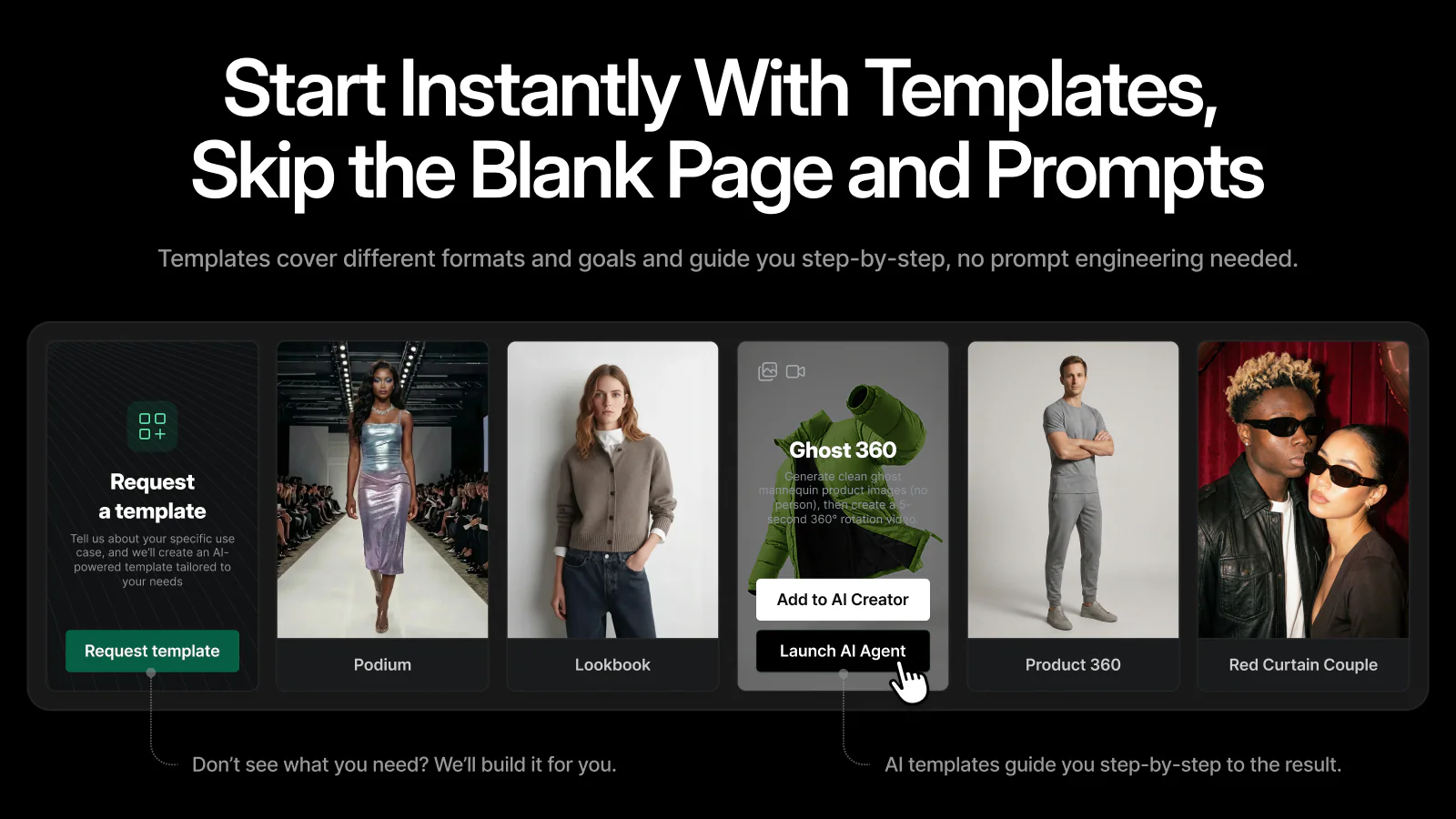
The reality is somewhere in between. We've built agentic AI templates that guide merchants step by step from start to outcome.
A brand picks from hundreds of templates tailored to specific use cases: product videos, lookbook videos, lifestyle videos, UGC videos, try-on videos, Reels, ad creatives, collection drops. They provide their inputs, and the AI steers the creative direction toward the outcome they need.
No confusing prompts. No learning curve. You just pick a template and go.
You've clearly been close to e-commerce for a long time. How did your background lead you here?
It started at home.
Growing up, I watched my father build his entire life as an entrepreneur. He never worked a single day as an employee. That gave me a front-row seat to what freedom looks like when you build on your own terms, and it became a lifelong example.
I discovered PPC ads in 2007 and launched my first business while studying economics in university. That pulled me into the startup world, and by 2011 I was leading an e-commerce logistics startup. That's when I got hooked on startups.
Over 12 years, I helped build multiple startups solving e-commerce problems in logistics, payments, marketing technology, and workflow automation. One was acquired by a major tech company. I also built my own D2C brands, selling through both direct channels and Amazon. So I've been on both sides: building solutions for e-commerce and running the brands themselves.
At some point, I decided to start my own company. Being able to serve entrepreneurs, especially the small and medium ones who bet on themselves, is what drives me. I wanted them to succeed, and I wanted to build my own future the same way they are building theirs. The first piece was an on-site video widget to increase conversion rates and fight rising ad costs. That led to shoppable video. And shoppable video led to the AI video commerce platform that VideoPoint is today.
What do customers fall in love with first when they start using VideoPoint?
Two things.
First, the ease of use. It does a lot behind the scenes, but you'd never know it. No learning curve.
Then, the results. Customers free up their time, save money by generating content at a fraction of the cost, and boost conversions by 10% to 40%. The first results are typically visible within the first few weeks.
For example, iconic L.A. swimwear fashion brand Minimale Animale boosted their conversion rate by 24% with shoppable AI videos in just 30 days.
There are a lot of tools in this space. What makes VideoPoint different?
Most tools in this space solve one piece of the puzzle. AI content creation here, shoppable video player there, social media auto-poster somewhere else, and a virtual try-on app on top of that. They don't talk to each other. Different interfaces, different systems. Merchants end up juggling a dozen tools, tab-hopping between platforms, downloading files from one app, uploading them to another, and spending more time managing the workflow than actually creating content.
Coega, one of our customers, was doing exactly that. It took them 15 minutes just to get a single video done, bouncing between tools to generate, edit, download, and publish. With VideoPoint, they generated 100 videos in 15 minutes, and they were auto-distributed across his store pages: home, collection, and product. That's the difference between a standalone tool and a single connected workflow.
VideoPoint takes an end-to-end approach. Product data flows in automatically, so merchants just pick templates and go. Customers can cover their entire catalog and publish all of it instantly. Every video is shoppable out of the box. On-site, they auto-distribute through widgets like stories, carousels, highlights, and video landing pages. Off-site, straight to YouTube, Instagram, TikTok, and Meta Ads Manager. One platform, from product data to published shoppable content.
We also take a focused app stack approach rather than building all-in-one software packed with features most merchants never use. Customers pay only for what they actually need. VideoPoint handles AI video creation and shoppable video distribution. TryPoint, our separate app, handles virtual AI try-on and as of now has the highest fit accuracy of any tool on the Shopify App Store. More apps are coming for chat, A/B testing, and landing page optimization. This approach lets brands reuse their assets across every touchpoint without getting locked into software that clutters their workflow.
Dead simple tools that make you money. That's what we build.
What's a shift happening in your industry that you feel like not enough brands are talking about?
The content production crisis.
Commerce is fragmenting across more surfaces than ever. TikTok Shop is where a growing share of fashion consumers now discover and buy products. Instagram, YouTube Shopping, and Pinterest keep expanding as shopping channels. AI agents are starting to buy on behalf of consumers through Shopify's new agentic commerce protocol. Everyone sees the channel expansion.
What they're not talking about is what this means for content. Every one of those surfaces needs different creatives. TikTok Shop needs native, authentic short-form video. Meta and Google ads need dozens of variations per campaign because creative fatigue hits faster than ever. AI agents need rich, structured product data. And the storefront itself still needs to convert.
The math just doesn't work anymore. A brand running paid ads today can need 50 to 100+ creative variations per month just to keep performance stable across channels. Most brands are still operating on the old model: one quarterly shoot, a handful of assets, and a prayer. They're spending 80% of their budget on media and 20% on creative, when creative is now the single biggest lever on ROAS.
The real bottleneck in e-commerce isn't distribution, targeting, or even having the right product. It's the ability to produce enough quality video and visual content, fast enough, to feed all these new surfaces. The brands that figure out how to make enough content fast enough will win. The ones that don't will keep burning ad spend on stale creatives and wonder why their CAC keeps climbing.
What's one lesson you learned the hard way while building VideoPoint?
This one is about shoppable video pricing. We started with performance-based pricing where brands would only pay a share of purchases made through our widgets. The idea was to make pricing as fair as possible: you only pay when it works. But just explaining how it works would take five minutes on every call. It became a roadblock for growth.
We switched to usage-based pricing, and it changed everything. Brands understood it immediately, decisions happened faster, and hesitation dropped. The belief that pricing needs to be fair didn't change, just how we deliver it. For shoppable videos, we charge per video view, where a view only counts when the video is watched for at least 3 seconds. Many of our major competitors charge for widget impressions, which counts even if the video was never actually watched. We want merchants to pay for actual usage, not inflated numbers.
The lesson: fair pricing alone isn't enough. It also needs to be easy to understand and easy to explain. If a merchant can't grasp how they're being charged in 10 seconds, it doesn't matter how fair it is.
If you could go back to Day 1, what would you do differently?
Start selling the product and building the audience from day one.
We built in silence. When we finally launched, we were starting from zero: no waitlist, no community, no brand voice, audience, or reputation. Every single customer had to be acquired from scratch.
Building in public, validating every product decision with target customers, and growing the audience as you go gives you an enormous advantage over launching a product to a handful of users.
Last one... what's the best piece of advice you've ever received?
From my father: "Look within yourself first. You'll get further that way."
It's easy to find excuses in circumstances, in other people, in things that are out of your control. But none of that helps you move forward. When you take ownership of the outcome and honestly reflect on what you could have done differently, it puts the responsibility for everything you do on a completely different level. It makes you stronger and more impactful as a person.
I love this advice for how simple, fundamental, and universal it is. Since childhood, it shapes how I reflect on things and helps me adjust and keep moving forward.
Join 17k+ subscribed
Get The eCommerce Pulse
The twice-weekly briefing for operators, founders, and partners shaping modern DTC.