KeepCart Review: The Margin Leak You're Probably Ignoring

Marissa O'Halloran is the Commerce Lead of 1800DTC. When she's not researching and writing about the latest DTC products and brands, you can find her hunting down the best matcha in town, overpacking her carry-on, or hanging out with her golden retriever, Pepper.
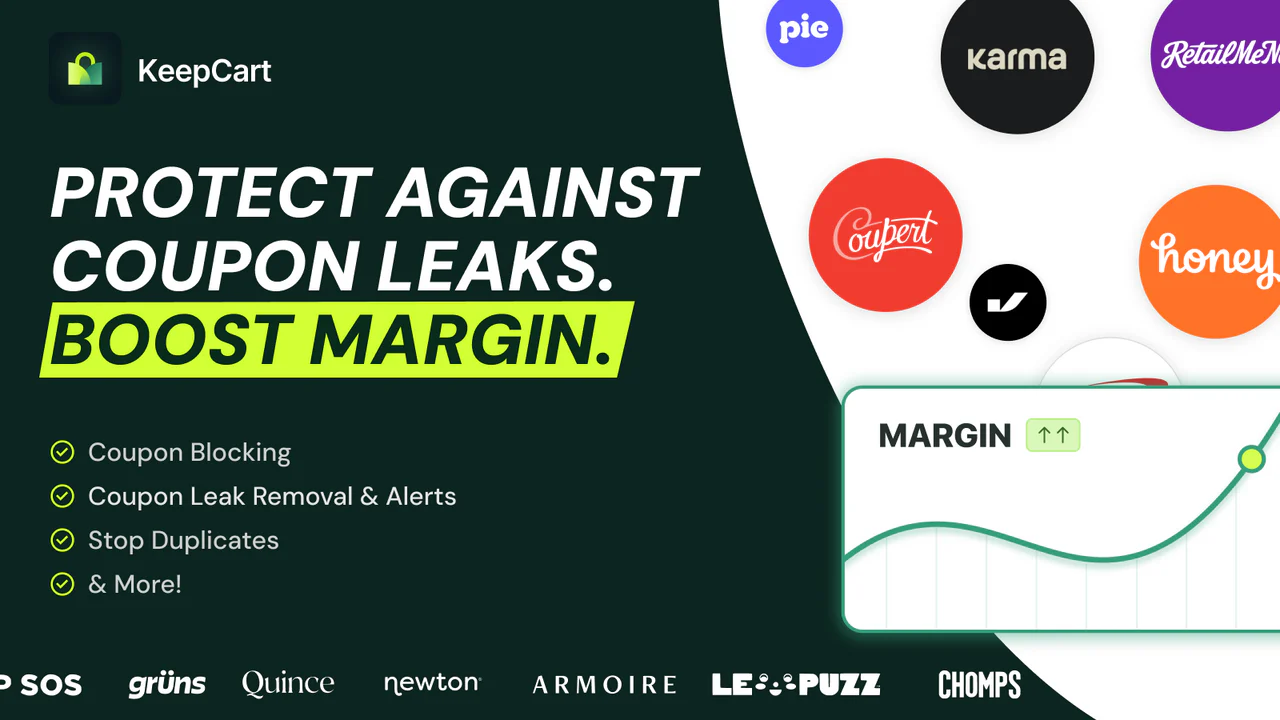
Here's a scenario that probably sounds familiar. You set up a promo code for an influencer campaign, push it live, and the launch goes well. Sales come in. You pay out the commission. Then, a few weeks later, you pull the data and something feels off. Orders are higher than expected but margins are soft, affiliate payouts look inflated, and you can't quite connect the dots on what actually drove the sales.
What probably happened: your code leaked. It got picked up by Honey, Capital One Shopping, or one of a hundred other browser extensions, and from that point on it was being auto-applied at checkout to customers who never came from your campaign. You paid the influencer commission, gave away the discount, and got messy attribution in return. All on a code that was only supposed to go to one audience.
This is a problem a lot of brands are dealing with without even realizing it. And KeepCart is built specifically to fix it.
What Is KeepCart?
KeepCart is a checkout protection app for Shopify brands that does two things: it blocks browser extensions from auto-applying your coupon codes at checkout, and it monitors coupon sites to alert you when your codes have leaked.
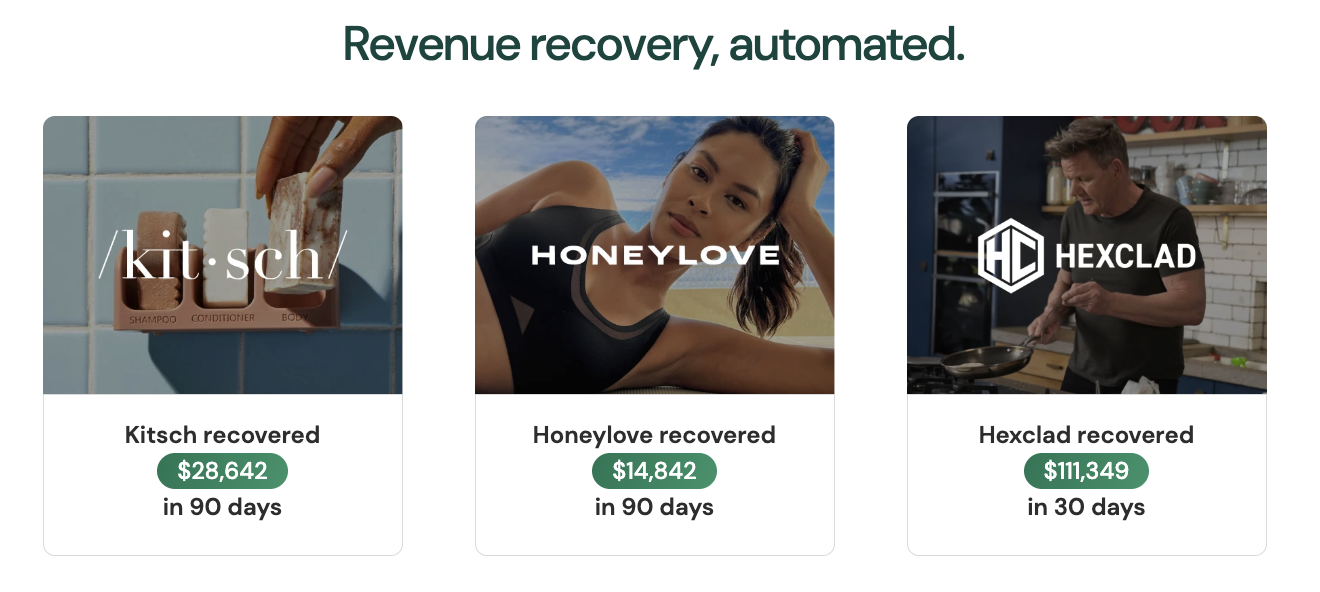
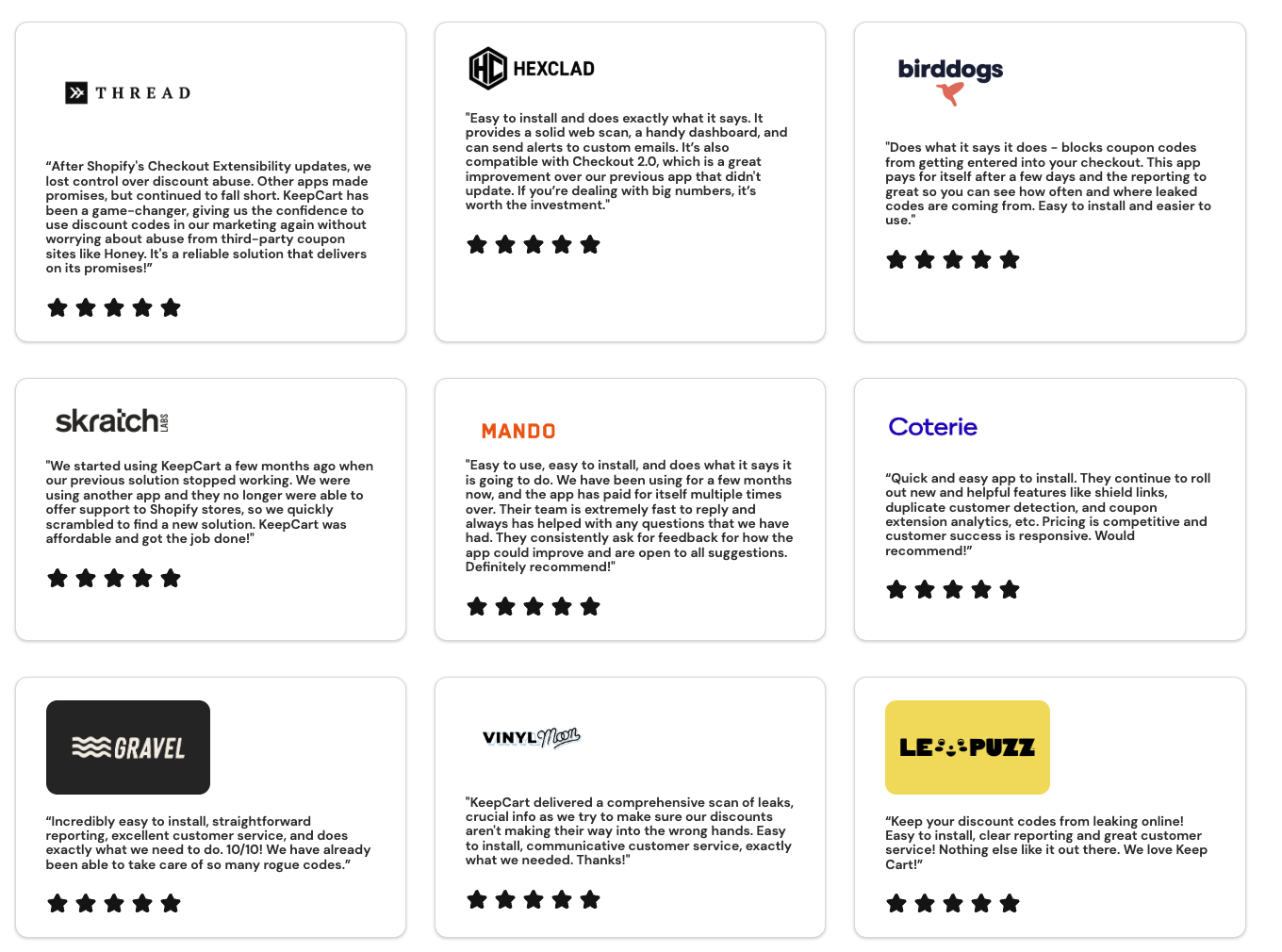
It's rated 5.0 stars on the Shopify App Store, carries the "Built for Shopify" badge (which means it meets Shopify's highest standards for performance and integration), and is used by brands like Gruns, HexClad, Rhoback, Coterie, and Quince.
Setup takes a few minutes, requires no developer, and doesn't affect site speed or your checkout experience. It works with Checkout Extensibility and headless storefronts too, so it's not limited to a specific theme structure.
How the Blocking Actually Works (And What Customers Experience)
This is probably the first question most operators have, so let's get into it.
When a shopper with Honey or a similar extension installed gets to your checkout, KeepCart quietly prevents the extension from surfacing or auto-applying any code it has stored. The shopper doesn't see an error. Your checkout doesn't break. The extension simply doesn't fire. From the customer's perspective, nothing unusual happens. From your perspective, your intentional discounts stay intentional.
If you gave a customer a specific code, it still works fine at checkout. KeepCart is blocking unauthorized auto-application from extensions, not your own codes. The shopping experience for your real customers is completely unaffected.
The Problem in Plain Numbers
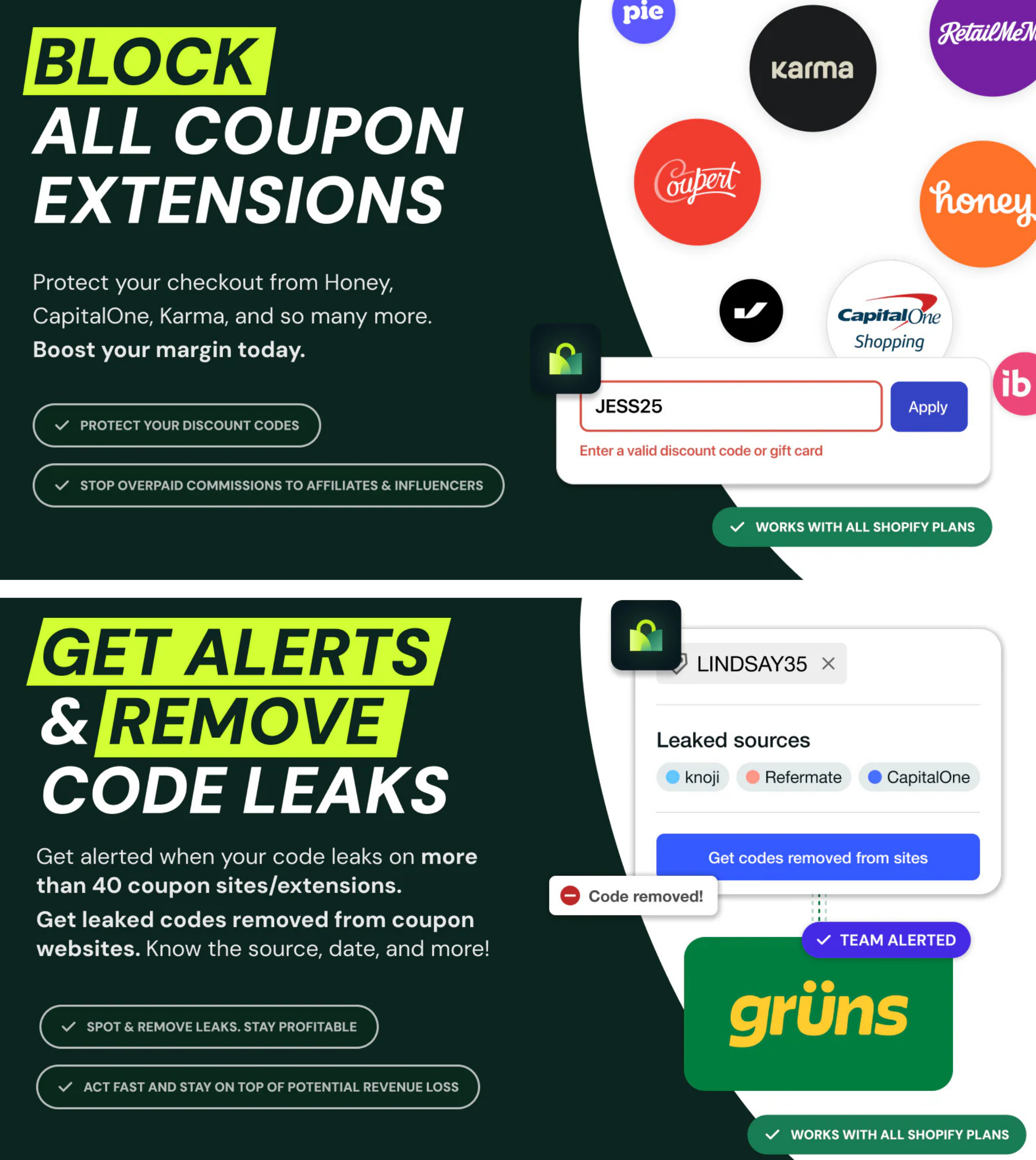
Browser extensions like Honey, Capital One Shopping, Rakuten, Karma, RetailMeNot, and Coupert have one goal: find and apply a coupon code at checkout. For shoppers, that's a feature. For brands, it's a margin drain.
Once a code gets scraped, it gets served to anyone checking out on your site, regardless of where they actually came from. Here's where the losses stack up fast:
You're giving the discount to customers who would have paid full price. You may be paying affiliate commissions on sales the affiliate didn't drive. And your attribution data is polluted, so you can't tell what's actually working in your marketing.
One merchant on the Shopify App Store described finding out that a top affiliate was simply uploading their exclusive code into Honey, meaning the brand was paying Honey, paying the affiliate, and giving the customer a discount all at once on orders that had nothing to do with a legitimate referral.
That kind of leak is hard to catch manually. KeepCart catches it automatically.
Core Features
Coupon Extension Blocking - Blocks 125+ browser extensions from auto-applying codes at checkout, including Honey, Capital One Shopping, Rakuten, Coupert, Karma, and RetailMeNot. No site speed impact, no theme conflicts.
Coupon Leak Alerts - Monitors 100+ coupon sites, plus ChatGPT, and alerts you the moment one of your codes shows up somewhere it shouldn't. The faster you know, the faster you can act.
Automated Code Removal - On higher-tier plans, KeepCart automatically requests removal of your codes from coupon sites. No manual outreach required.
Protected Discount Links - Instead of sharing a raw discount code, you share a protected link. The discount only activates when a customer arrives through that link, so the code can't be extracted and redistributed elsewhere. This is the move for influencer and creator campaigns where you want airtight control over who actually gets the deal.
Duplicate Account and Order Blocking - Prevents customers from creating multiple accounts to abuse discount codes or resell products on Amazon. More common than most brands expect, especially around launches and sales events.
Coupon Extension Analytics - Compare AOV, conversion behavior, and purchase patterns between customers who came through coupon extensions versus everyone else. This data alone helps you quantify what the leaks are actually costing you.
Leak Dashboard - A clean, easy-to-read view of which codes have leaked, where they went, and what's been done about it. No digging through spreadsheets or raw reports.
Tool mentioned
KeepCart
KeepCart makes it easy to block coupon extensions and be notified of coupon leaks. No more overpaying affiliates & influencers.
Who Should Use KeepCart?
If you're running affiliate programs through networks like ShareASale, AvantLink, or similar platforms, this tool is pretty much essential. Affiliate codes are among the most commonly leaked, and the payout damage on fraudulent conversions compounds quickly.
It's also a strong fit for brands that regularly run influencer codes, launch-specific promos, or subscriber-only discounts, basically any code that was designed for a specific audience and would hurt if it went wide.
If you're not running any discount codes at all, there isn't much here for you. But for everyone else, KeepCart is protecting something you've already earned.
Workflow and Day-to-Day Experience
Once it's installed, KeepCart mostly runs on its own. The weekly reports tell you what's leaking without you needing to log in and check constantly. If something gets flagged, you'll get an alert and can act on it right away.
One useful tactic that's made the rounds in the DTC community: when a code leaks, don't just delete it. Instead, lower the discount value to something like 2% or 3%. Extension users will often still check out with it since the autofill worked. You keep the conversion, but the margin hit is minimal. It's a small workaround that can recover value from a bad situation while you sort out the source of the leak.
The platform is also built to take feedback. Multiple reviewers mention that the team actively asks for input and has rolled out new features based on merchant requests, things like shield links, duplicate customer detection, and coupon extension analytics.
Pricing
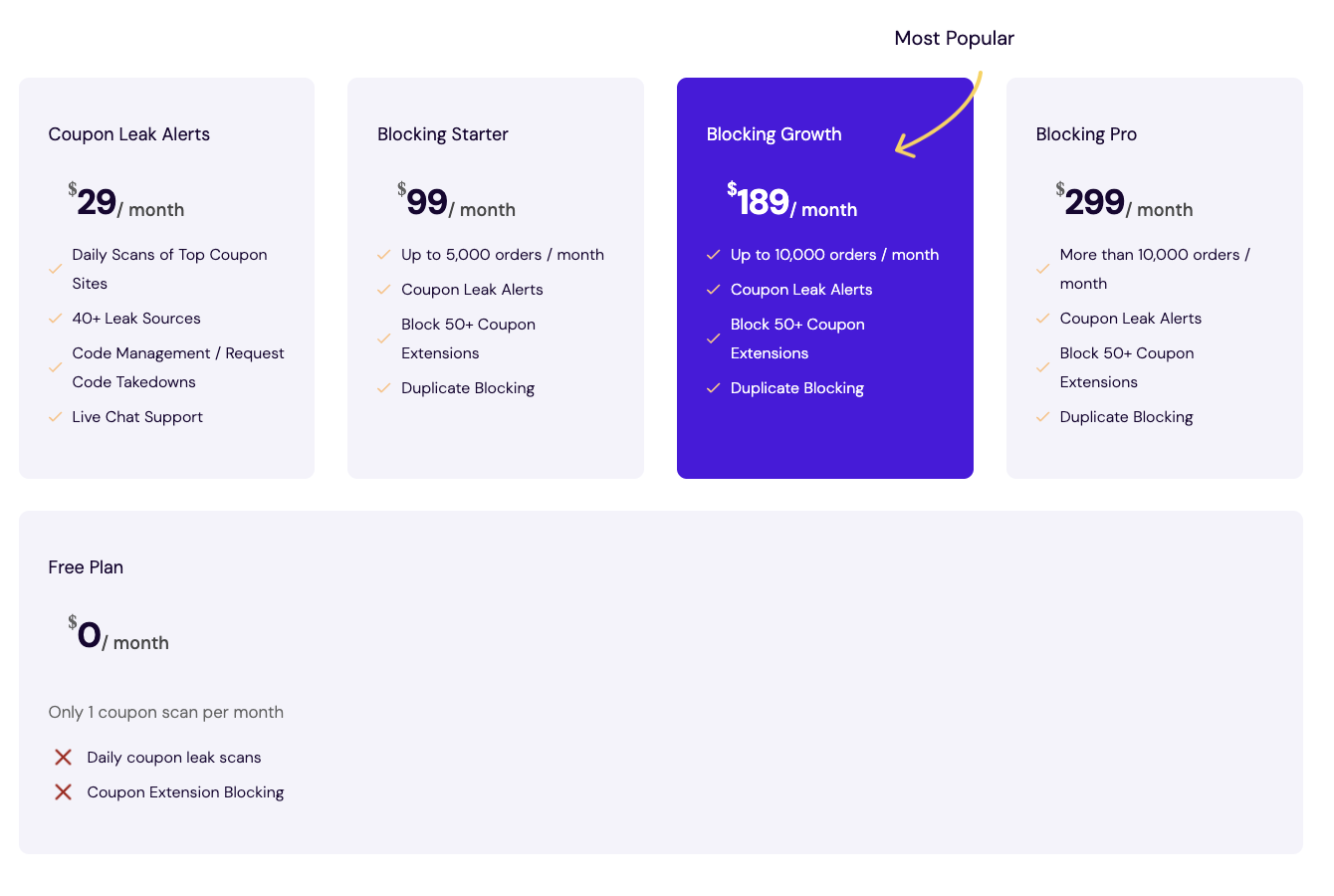
KeepCart has a free plan and scales up based on order volume and the level of protection you need.
Free Plan: One coupon scan per month, coupon extension analytics, coupon use insights, and monitoring across 40+ leak sources. A good way to see the scope of the problem before committing.
Coupon Leak Alerts: $29/month: Daily scans, leak source identification, code management tools, and live chat support. 14-day free trial included.
Blocking Starter: $99/month: Up to 5,000 orders/month. Adds coupon extension blocking (40+), duplicate blocking, and live chat support. 14-day free trial included.
Blocking Growth: $189/month: Up to 10,000 orders/month. Full extension blocking, duplicate blocking, and everything from lower tiers. This is the most popular tier.
Blocking Pro: $299/month: More than 10,000 orders/month. Full extension blocking, duplicate blocking, and everything from lower tiers. The ultimate package.
For brands actively running affiliate or influencer campaigns, the ROI conversation is usually pretty simple. One leaked code running unchecked for a few weeks can easily exceed what the Blocking Starter plan costs for the entire year. The free plan is a low-risk way to find out exactly what's happening at your checkout right now.
How KeepCart Compares to Alternatives
The main competitor in this space is Veeper (formerly CleanCart). KeepCart differentiates itself by claiming broader extension coverage than any other tool, more robust leak detection, and no impact on site speed. KeepCart also publishes a direct head-to-head comparison if you want to get into the specifics: keepcart.co/keepcart-vs-veeper.
The 5.0 rating on the Shopify App Store across 60+ reviews is also worth noting. It's rare for a tool in any category to hold a perfect score at that review volume, and the feedback consistently points to fast support, simple setup, and immediate visibility into code activity.
Breakdown Conclusion
Most brands find out about coupon leaks the hard way: a weird dip in margins, an inflated affiliate payout report, or a customer mentioning they "found a code online" for a discount that was supposed to be exclusive. By then, the damage is already done.
KeepCart isn't a growth tool. It's not going to bring you new customers or drive new demand. What it does is protect the margin and attribution integrity on the revenue you're already generating. For brands running any kind of discount strategy, that's not a nice-to-have, it's a gap that's costing you money right now whether or not you can see it.
The free plan requires no commitment and will tell you pretty quickly if you have a problem worth solving. That's probably the best place to start.
Helpful links:
Breakdowns may include sponsored content. We may make money when you click the links on our site. About Us.
Join 17k+ subscribed
Get The eCommerce Pulse
The twice-weekly briefing for operators, founders, and partners shaping modern DTC.