🚨 This BFCM is not like the others

Marissa O'Halloran is the Commerce Lead of 1800DTC. When she's not researching and writing about the latest DTC products and brands, you can find her hunting down the best matcha in town, overpacking her carry-on, or hanging out with her golden retriever, Pepper.
Happy Thanksgiving everyone and welcome to BFCM week, where everyone is refreshing dashboards, scanning ad costs and praying their checkout holds up.
Shoppers are cautious but still showing up, AI is doing more of the heavy lifting and the smartest operators are focusing on clarity instead of panic. In this week’s Signals, we’re looking at the trends, tools and plays shaping the biggest shopping week of the year.
Let’s get you prepped.

Everyone’s showing up for BFCM this year, but they’re not showing up with the same wallets.
Deloitte’s new holiday forecast makes one thing clear. The demand is there, but the dollars are tighter. Over 80% of shoppers say they plan to buy something this week, yet average spend is dipping to around $622, which is a drop from last year. It is a vibe operators can feel in real time: high intent, cautious execution.
What’s interesting is where and how people plan to shop. Gen Z is splitting their time between in-store and online, but online is still king for most shoppers. Almost half of consumers say they’re noticing higher prices this season, and a third think retailers are discounting less, so value is doing most of the heavy lifting.
The other quiet trend this year is financing. Nearly two-thirds of shoppers plan to use credit or BNPL to stretch their spend, and those who do are expected to spend more overall. It’s a reminder that offering payment flexibility can be a real lever this week, not just a checkout add-on.
For operators, the takeaway is simple. Participation will be high, but shoppers are choosing carefully. Clear value, flexible payment options, and tight online experiences will go further than blanket sitewide sales. If you make buying frictionless and confidence-driven, you’ll stand out in a week where everyone else is yelling louder.

What’s the vibe across the D2C ecosystem right now?
Why Patagonia’s most famous BFCM email still hits.
Jimmy Kim resurfaced a classic moment from 2011 that feels even more relevant this week. Instead of sending a “buy now” email on Black Friday, Patagonia told people not to buy their jacket. They walked shoppers through the environmental cost of production and asked them to think twice.
And sales went up.
The lesson here is not to copy Patagonia or to get cute with reverse psychology. It is that people can feel the difference between a brand that’s only chasing the moment and a brand that stands for something. In a week where inboxes are full of urgency, countdowns, and discount fatigue, values stand out more than volume.
For operators, this is a simple reminder. Your post-purchase flows and BFCM emails don’t have to scream louder to work. They can reinforce what your brand actually cares about. They can make people feel good about buying from you. And that emotional clarity does more for long-term retention than any limited-time code.
Patagonia’s “don’t buy this jacket” email is still the best upsell of all time.
Most brands use post purchase emails to sell more. Patagonia used it to tell people not to.
Black Friday, 2011: They sent an email with a picture of a jacket. Headline: “Don’t Buy This Jacket.”
The… pic.twitter.com/iuznwWkvZO
— Jimmy Kim (@yojimmykim) November 24, 2025

We’re data nerds so you don’t have to be. Each week we’ll bring you some data to chew on with The Data Drop.
AI is quietly becoming the real MVP of this holiday season.
AI is playing a bigger role in holiday shopping this year than ever before, and the numbers tell a pretty clear story. 73% of marketers now use AI tools in their workflow, and search interest in “AI marketing tools” has increased 967% in the last two years. The introduction of AI into search results is accelerating the shift, with interest in “answer engine optimization” spiking as brands try to keep up with how discovery is evolving.
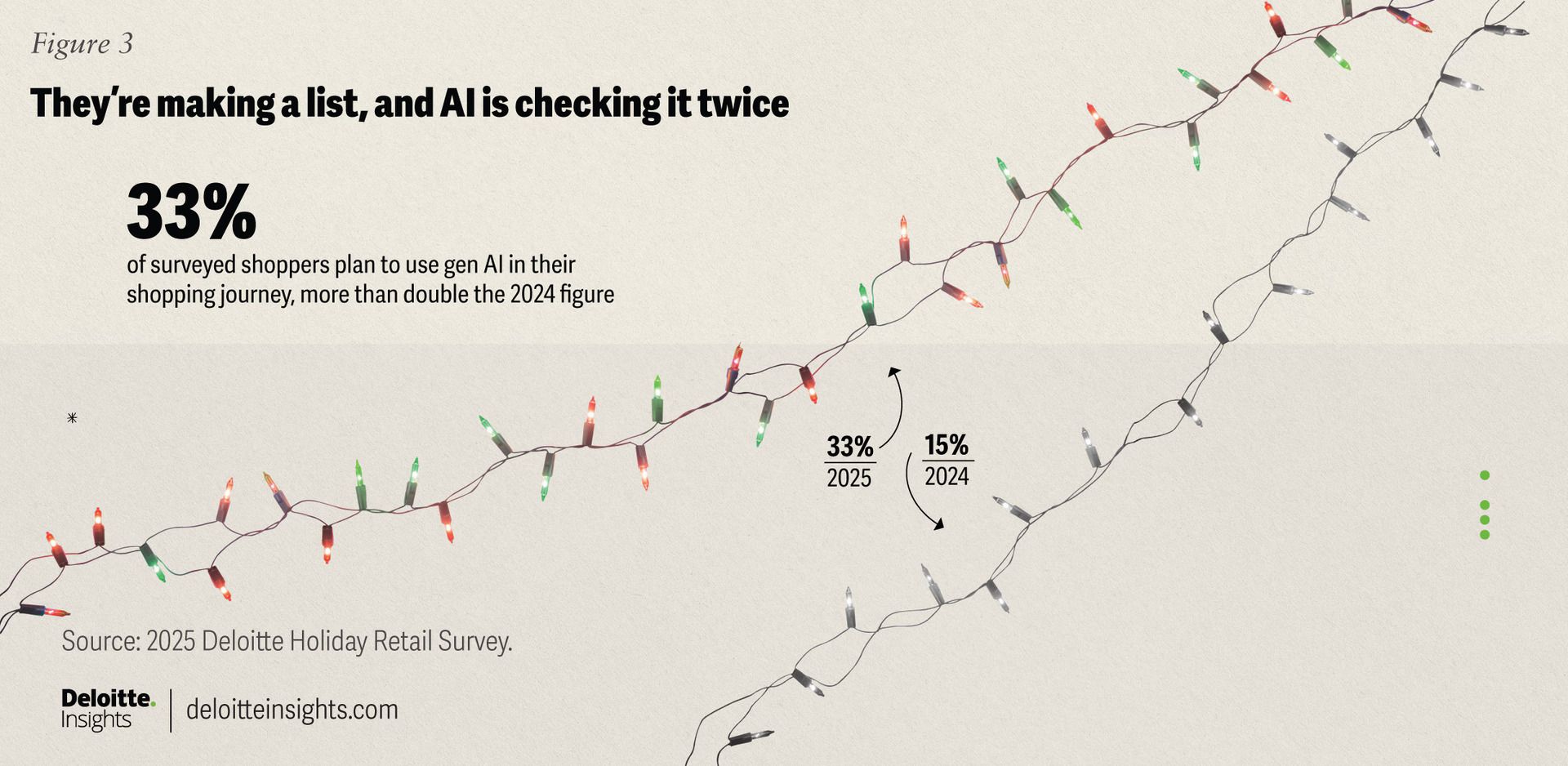
Consumer behavior is changing just as fast. This season, 33% of shoppers plan to use generative AI in their buying journey, which is more than double last year. Trust is rising, too. Deloitte found that 26% of consumers trust gen-AI tools more than they did six months ago. Younger shoppers are leading the trend, using AI to find deals, summarize reviews and build shopping lists before they ever reach a retailer’s site.
What all of this points to is a major shift in expectations. 80% of consumers say they are more likely to buy when the experience feels personalized. AI is speeding up that personalization while compressing the time between discovery and checkout.
For operators, this means your biggest wins will come from tools and onsite experiences that make the path from inspiration to purchase feel instant, guided and tailored.
Holiday shoppers are looking for speed, clarity and confidence. AI is stepping in to provide it. The question for brands is whether your experience feels as helpful as the tools they are already using.

One tool, one brand, one agency to watch out for this week.
Brand Spotlight: Mosh
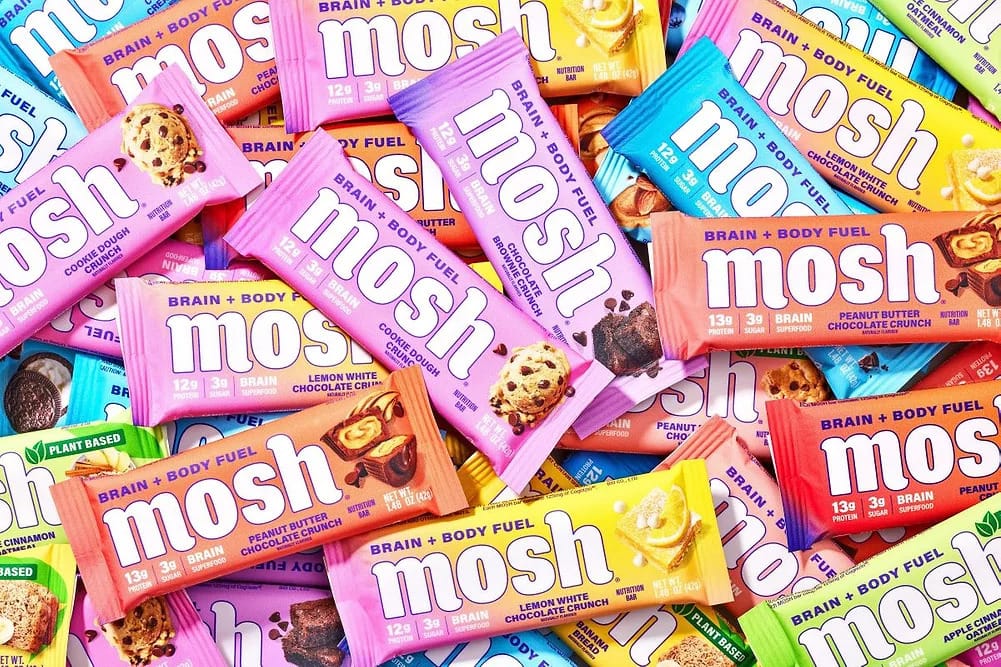
Mosh proves something important about modern CPG: a viral moment is nice, but a system that converts it is better.
If you have been watching the rise of celebrity and creator-led brands this year, Mosh is one worth paying attention to. Co-founded by Maria Shriver and Patrick Schwarzenegger, the brand blends wellness, functional nutrition, and mission-driven storytelling in a way that actually feels authentic. The bars are positioned as brain-healthy snacks, and the brand leans hard into education, community, and purpose rather than pure hype.
What makes Mosh especially interesting from an operator’s perspective is what happened after their Shark Tank episode. Instead of treating the traffic surge as a one-time spike, they turned it into real retention. The team used an AI-powered conversion engine to move Shark Tank viewers from first-time visitors into subscribing customers. That single decision generated a 19% lift in average order value, a 25% compounding monthly growth rate for new product subscribers over ten months, and up to 14% conversion rates from outreach campaigns that turned one-time buyers into repeat customers.
In a world where acquisition is getting noisier and BFCM discounts aren’t enough to build loyalty, this is a useful reminder. Celebrity visibility can get people in the door, but systems and smart post-purchase experiences are what keep them coming back. Mosh found the sweet spot between brand power and operational discipline, and that is what makes the model worth studying.
In the Toolkit: Triple Whale
This is the tool operators trust when the numbers won’t sit still.
If you’ve ever asked “Which channel actually drove this revenue?” only to end up confused, Triple Whale might be the tool you lean on. Their recent partnership with Omnisend means email and SMS data now sits alongside ad, website and revenue data, all in one dashboard.
What this means practically:
- You can see email/SMS metrics like click-throughs, unsubscribes and conversions, next to paid ad performance and site data.
- Hourly data updates give you the chance to react in near-real time rather than waiting for the weekly report.
- With everything unified, you gain a clearer picture of what’s moving the needle, and what isn’t.
For this week’s context (hello BFCM week), it’s especially relevant. As traffic spikes and new variables enter the funnel, having all your channels talking to each other becomes a competitive edge. When checkout is collapsing into search, AI is influencing journeys and funding environment is changing, you want tools that shrink blind spots and let you make decisions quickly.
Check out the Omnisend X Triple Whale partnership
Agency Assist: Lunar Solar Group
If you want an agency that actually understands how DTC brands grow, Lunar Solar Group is one to keep on your radar.
Lunar Solar Group has built a strong reputation in the DTC space by focusing on performance, lifecycle strategy, and full-stack retention. They work across email, SMS, paid media, creative, and site experience, but what really makes them stand out is how dialed-in they are to the operational side of brand building. They’re not just producing assets. They’re building systems that support growth long after a campaign ends.
Their recent acquisition of Sharma Brands is a perfect example of how they’re scaling that vision. Instead of absorbing Sharma into a single structure, Lunar is creating a broader ecosystem where each brand keeps its own identity while tapping into shared strategy, technical expertise, and road-tested playbooks. For a lot of operators, that kind of infrastructure is gold, especially when the rest of the industry is moving toward consolidation, tighter funnels, and smarter workflows.
💡 What this means for DTC teams: Lunar is becoming more than an agency. They’re building a performance-driven platform that blends retention, creative, and conversion under one roof. And in a year where clarity and efficiency matter more than ever, having a partner with that level of integration can feel like a serious advantage.
Get started with Lunar Solar Group
Are you D2C (Down 2 Collab)?
At 1-800-D2C, we spotlight the real builders behind the tools and brands featured on our site and the D2C players putting those tools to work. Let’s collab:
For Brand Founders:
- List your brand on 1-800-D2C to show off your incredible tech stack.
- Have an inspiring journey about building your brand? Get featured in our Under The Hood interview series and share how you’re scaling, innovating, and winning.
For Tool Founders:
- List your tool on 1-800-D2C today to show off your brands and become a Friend’s Rates member. Sign up today.
- Want to share the story behind your tool and how it's changing the D2C space? Fill out our founder questionnaire to get featured in our Behind The Tool interview series!
Join 17k+ subscribed
Get The eCommerce Pulse
The twice-weekly briefing for operators, founders, and partners shaping modern DTC.