1800Hotline 017 // Warby Parker x Google x Samsung, $325M for a stain remover, and protein ice cream with wild macros
As the CEO of 1800DTC, I'm focused on building one of the strongest communities in commerce. Through content, events, and shared knowledge, the goal is to connect the best operators, brands, and technology shaping the future of DTC. My background is rooted in the Shopify ecosystem. I've worked across leading platforms and agencies including Route, Stay AI, and Toki, and most recently led growth and partnerships at Lunar Solar Group. Along the way, I've spent years working closely with brands, operators, SaaS partners, and agencies across the commerce landscape. Across every role, the throughline has remained the same: commerce, content, and community. I'm based in Utah. When I'm not working, you'll likely find me skiing, biking around town, or training for my next competition.
Hey DTC fam,
A few things stood out this week.
Miss Mouth’s selling for $325M is a reminder that the most interesting exits do not always come from the categories getting all the attention. Warby Parker is making a bet that most DTC brands never get the chance to make. And David just launched something that belongs in a freezer.
Let’s get into it.
But first, take a second to fill out the form. It helps us connect the right people and surface opportunities across the community.
Connect w/ the 1800DTC Community

This edition is presented by Klaviyo.
From Campaigns to Conversations: Why the Future of DTC is Always-On
For most DTC brands, “personalization” still means blasting segmented emails and hoping for the best. Klaviyo’s calling it: the era of one-way message marketing is ending. What’s replacing it? Continuous, context-aware conversations between brands and shoppers, mediated by AI agents.
Some quick numbers from Klaviyo’s 2026 AI Consumer Trends report (a survey of 8,000+ global shoppers) make the shift hard to ignore:
-
60% of consumers use AI at least weekly, and more than 1 in 5 now start with an LLM when making decisions or researching products.
-
In 2022, the average Google search was 1–2 words. Today, 30% of AI searches contain 8+ words, often laced with emotional context like “a thoughtful gift for my sister” or “something to cheer me up after a long week.”
Shoppers aren’t typing “BEST [ITEM]” anymore. They’re having full-on conversations.
Most platforms aren’t built for this. They treat marketing, support, and commerce as three separate motions duct-taped together. Your service team knows the customer’s last return, and your marketing team knows their last click. Not great.
That brings us to how Klaviyo is approaching it: collapsing those silos into a single conversational layer, with AI agents as the new interface between brands and customers. Their Customer Agent handles shoppers in real time. Their Marketing Agent assists your team. Both sit on the same B2C CRM, where the customer’s full history (purchases, browsing, loyalty tier, every past conversation) already lives.

Brands are already seeing it work. Folk Clothing resolved 50%+ of support queries with AI in 90 days. Ministry of Supply resolved 84% of product recommendation chat queries in the same window.
We know most of you already use Klaviyo. For those that don’t, Klaviyo is free to sign up. Try the one platform that can help bring about these always-on experiences today.
The next generation of email platforms won’t be “tools.” They’ll be AI operators.
Most email workflows still look like this:
Strategy Brief → Choose Template → Add Products & Copy → QA → Send
That made a lot of sense when email creation was considered a manual process. Today, it doesn’t make a lot of sense.
Nexmail, founded by former operators from Klaviyo, Attentive, and leading email agencies, has built what they’re calling an AI-powered lifecycle creative system. The platform crawls a brand’s site, learns its visual identity, products, and tone, then generates fully designed, on-brand emails that can push directly into ESPs like Klaviyo. Email marketing should account for ~40% of e-commerce revenue if you’re consistent and this can help drive more revenue within seconds.
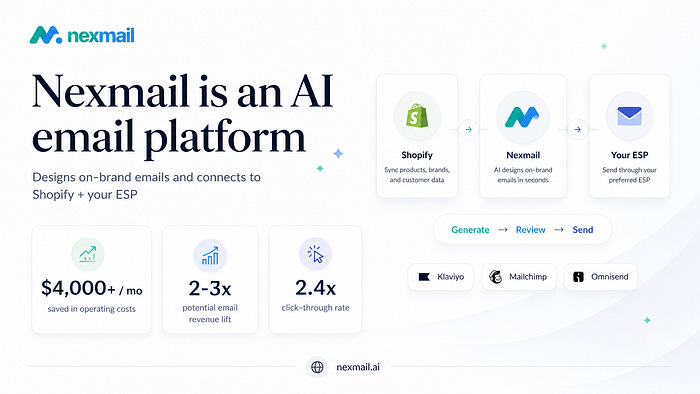
It also solves a lot of the execution layers partners have shared that have bottlenecked ecommerce. For years, retention marketing has been limited by production bandwidth. Just think back: let’s test ore, review data, and create more variety. That meant more people, revisions, and operational drag.
Nexmail changes that equation with their no non-sense, email design system. It delivers where ecommerce software continues to rend: systems that execute alongside your team.
Start creating email campaigns
Brand Feature: Unreal Peanut Butter Drops
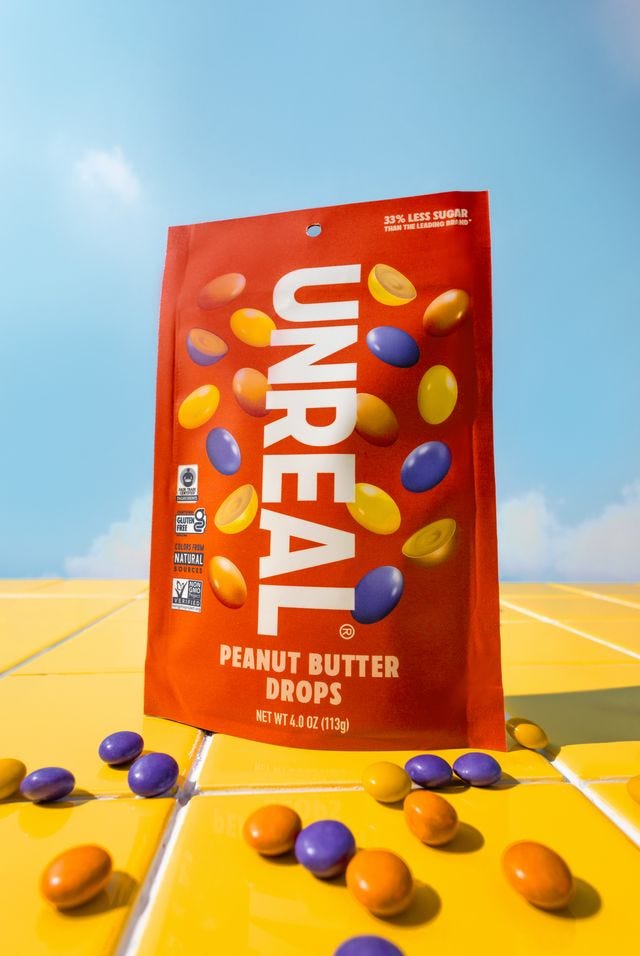
Unreal has been on a mission to unjunk the snacks people actually want to eat. This week they did something they have never done before.
Peanut Butter Drops are Unreal’s first product without chocolate, and the timing is not a coincidence. Peanut butter as an ingredient is up 23% year over year in search and is showing up in everything from lattes to savory snacks to desserts. The opportunity Unreal spotted: roughly 30% of better-for-you chocolate shoppers are still reaching for conventional peanut butter sweet snacks because nothing in the cleaner aisle has done the format justice yet.
Peanut Butter Drops are the answer to that. Think the nostalgic peanut butter candy you grew up with, rebuilt from scratch with real, creamy peanut butter, 33% less sugar than the leading conventional brand, and a shell colored with natural dyes from radish, turmeric, beet, and spirulina. Non-GMO verified, certified gluten-free, and Fair Trade certified.
Available now at Whole Foods nationwide and at unrealsnacks.com, with more retailers coming this summer.
What We’re Seeing
-
Warby Parker just announced it is launching AI-powered smart glasses in partnership with Google and Samsung this fall. The frames run on Google's Android XR platform, powered by Gemini AI, and let wearers access information, get navigation help, send texts, and manage daily tasks hands-free. Warby Parker designed the frames to feel like everyday eyewear rather than a tech gadget, drawing from its own style archive and fit data. This is a DTC brand using its core equity in design and customer trust to move into an entirely new product category with the right tech partners behind it. More on this in the Big Story below. → Full story
-
Church and Dwight is acquiring Miss Mouth’s Messy Eater for $325M. The stain remover brand generated $80M in net sales and $28M in EBITDA in 2025, putting the deal at roughly 4x sales. Church and Dwight has been on a consistent acquisition run, picking up Touchland, Hero Cosmetics, and TheraBreath over the past five years. Miss Mouth’s sits at Walmart, Target, and Amazon, and the deal gives Church and Dwight another high-velocity consumer brand with strong retail placement. A $325M exit for a stain remover brand is also a useful reminder that the most interesting outcomes in CPG do not always come from the categories everyone is watching.
-
Frosh, a functional juice box brand co-founded alongside The LaBrant Family and Ciara and Russell Wilson, just debuted at 1,650 Target stores. Each juice box packs 5g of protein, real fruit juice, and key vitamins and minerals in a format kids already recognize and reach for. The kids nutrition category has been waiting for a product that bridges the gap between what parents want and what kids will actually drink. Frosh is making a real early case for that position and the Target placement on launch day signals serious retail confidence in the brand.
Big Story: What Warby Parker's Smart Glasses Move Actually Tells DTC Operators
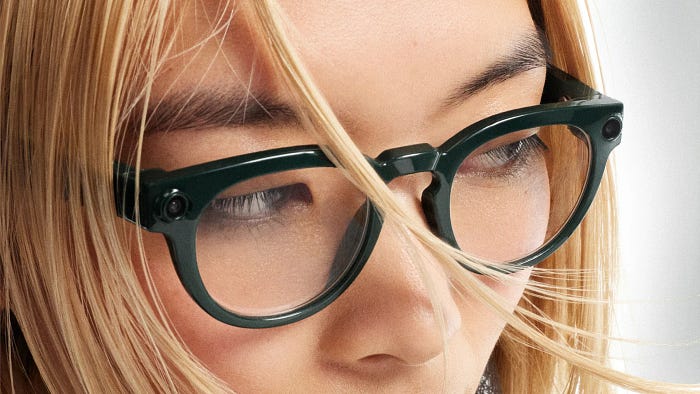
Warby Parker started in 2010 by doing something genuinely disruptive: selling prescription glasses online at a fraction of what traditional optical retailers charged. Direct to consumer, home try-on, no middleman. The brand helped define what DTC could look like as a model and as a customer relationship.
This week the company announced it is entering an entirely new category. Its Intelligent Eyewear collection, developed in partnership with Google and Samsung and launching this fall, puts Gemini AI inside a pair of frames designed to feel like a normal pair of glasses. Voice-activated navigation, hands-free access to information, real-time assistance throughout the day, all without pulling out a phone. Audio glasses first, with display glasses to follow.
The brand is competing directly with Meta’s Ray-Ban smart glasses, which have been on the market for years and have built real consumer awareness in the category. Warby Parker’s bet is that design matters more than specs in wearable tech, and that a brand with deep customer trust in the eyewear category is better positioned to make smart glasses feel like a natural upgrade rather than a gadget.
For DTC operators the strategic lesson here is worth sitting with. Warby Parker did not chase this category because it was trending. They moved into it because they had built something that allowed them to: a loyal customer base, a clear design identity, strong retail and direct distribution, and the credibility to bring people along into something new. The partnership with Google and Samsung gives them the technology backbone. The brand they spent 15 years building gives them the distribution advantage.
The brands that will win in the next five years are not necessarily the ones that launch into the hottest categories. They are the ones that build enough trust and equity with their customers that they can bring those customers somewhere new. Warby Parker just showed what that looks like.
Quick Hits
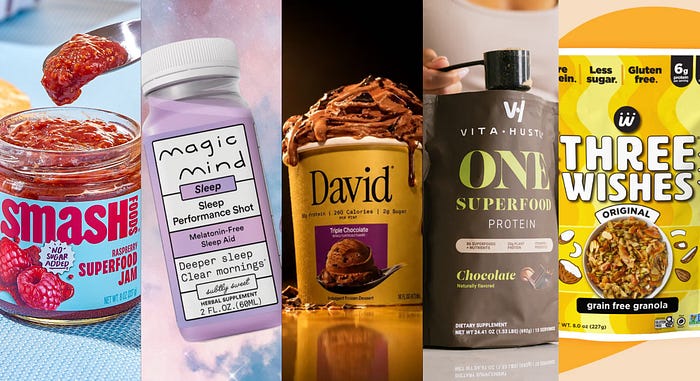
Smash Foods raised $5M just six months after closing its Series A.
The superfood jam brand, founded in 2020 by Anna Peck and Steve Ford, makes jams from upcycled fruit, dates, and chia seeds and at the time of its Series A had tripled sales year over year while operating profitably in over 3,000 doors including Whole Foods, Sprouts, Target, Walmart, and Costco. Raising again this quickly after a Series A is a strong signal that the business has real momentum and the investors who came in earlier wanted to double down before the next stage of growth. One to watch as distribution continues to expand.
Magic Mind just launched a Sleep Performance Shot and is backing it with a guarantee.
The new SKU blends plant-based melatonin with lavender, chamomile, lemon balm, magnesium glycinate, ashwagandha, and L-Theanine. The guarantee is the interesting part: try it for 15 nights and if your sleep score does not improve on your preferred tracker, you get a full refund. A results-based guarantee in the wellness category is a bold move and a meaningful differentiator at a time when the supplement aisle is crowded with products making similar claims. Available online now, launching in Sprouts, H-E-B, New Seasons Market, and Central Market in June. → More
David just launched protein ice cream pints and the macros are genuinely hard to believe.
Four flavors: Vanilla Bean, Triple Chocolate, Triple Peanut Butter, and Cookie Dough. Every pint delivers 30g of protein, between 210 and 260 calories, and no more than 2g of sugar. Available DTC at $90 for a six-pack with free two-day frozen shipping. David has been methodically expanding beyond its original bar format, first tinned cod, now frozen desserts, and each move reinforces the same brand thesis: high protein, minimal compromise, obsessive product quality. The category is getting crowded but nobody else in protein ice cream is hitting these numbers. Curious if the taste will be as good as its macros.
Kevin Hart’s plant-based nutrition brand VitaHustle just received a growth equity investment from Axum Capital Partners. Axum is one of the few Black-owned private equity firms operating at meaningful scale in food and beverage, focused on health and wellness brands with established traction. VitaHustle is currently sold at Walmart, iHerb, and QVC. The firm’s recent portfolio includes Clean Juice and Le Botaniste, and the deal signals continued institutional confidence in the celebrity-founded functional nutrition space. Terms were not disclosed.
Three Wishes just dropped its first-ever granola, and Grillo’s teamed up with PopUp Bagel on a limited collab.
Two new product moves from brands this community already knows well. Three Wishes has been steadily expanding its better-for-you grain portfolio and granola is a natural next step for the brand’s audience. Grillo’s continues to show up in unexpected places, this time the bagel aisle, leaning into the same brand character that has made every collab they have done feel earned rather than forced. Both worth a look. → More
Event Roundup

RSVP — CPG Supper Club: MN Edition | June 2 | Minneapolis, MN | 6 - 9 PM CDT
RSVP — Is Your Brand Ready for AI Search? #NYTechWeek | June 3 | New York, NY | 6 - 8 PM EDT
RSVP — AI in CPG & Retail #NYTechWeek | June 4 | New York, NY | 6 PM EDT
RSVP — Word of Mouth Podcast Launch Party | June 4 | Santa Monica, CA | 6 - 9 PM PDT
RSVP — Commerce Capital Summit 2026 | June 4 | New York, NY | 9 AM - 5 PM EDT
RSVP — NYC Commerce Club June Mixer | June 8 | New York, NY | 6 PM - 9 PM EDT
RSVP — DTC AI Council - Executive Workshop | June 10 | New York, NY | 2 - 4 PM EDT
RSVP — Not that Sweet & Lolo’s Pastry | June 10 | New York, NY | 5 - 7 PM EDT
That is Signals for Issue 017.
Warby Parker just bet that design wins in smart glasses. Do you think DTC brand equity translates to a category this different from where they started? Hit reply.
See you Thursday.
— Zach and the 1800Hotline Team
Find a partner, tool, or agency: 1800DTC.com
Become a sponsor: Partner with us
Get connected with our partners: Brand Form
Join 17k+ subscribed
Get The eCommerce Pulse
The twice-weekly briefing for operators, founders, and partners shaping modern DTC.