Breaking Down the Grüns Deal: A Gummy Insider's POV on the $1.2B Deal

Hudson is an entrepreneur with 15+ years of experience in consumer packaged goods (CPG), building and scaling brands that drive wellness, sustainability, and innovation. Based in Texas, he previously co-founded RISE Brewing Co. and is currently the CEO & Co-Founder of Plant People.
Key Takeaways
- Grüns current positioning, marketing, and future growth prospects made it an attractive target for Unilever.
- Gummies have solved an adherence issue because they're easier to take and stick with over time. At Plant People, it was noticed when experience improved that velocity follows.
- Broader CPG is shifting towards products people actually use, not just products that test well on paper or are forced. Consumer behavior is the battleground.
When a company like Unilever acquires a brand like Grüns, it’s easy to reduce it to a headline: ‘Big CPG Brand Buys a Fast-Growing Wellness Brand'. But that framing misses what’s actually happening.
This deal is less about one brand and more about what it signals about consumer behavior, format shifts, and where the future of supplements is headed. After 16 years building in the CPG category with brands like GILT, ALOHA, RISE Coffee, and now Plant People, 10 of those years have been deeply immersed in the gummy supplement category. This feels like a real inflection point for the industry.
The Signals Behind the Grüns Deal
There are really two ways to look at this deal: the macro shift toward adherence, and how Grüns executed against it.
For years, supplements were built around compliance. Capsules, powders, and tinctures were the formats that people heavily relied on. The problem is, most people don’t actually stick to those formats. Adherence has always been the quiet issue in this category. People buy with good intentions, but consistency breaks down quickly.
Gummies have solved that core issue. Not because they’re fun, but because they remove friction by fitting into people’s lives more naturally. Gummies are easier to take, easier to remember, and easier to stick with over time. We’ve seen this supported directionally in the data as well, with research suggesting adherence can be meaningfully higher when the experience improves — in some cases over 30% higher for formats like gummies versus traditional pills or capsules. We’re moving from a product-first world to a behavior-first one, because the best product in the world doesn’t matter if it isn’t used.
But beyond studies, this shows up clearly in real-world behavior. What Unilever likely sees in Grüns is the same thing I’ve seen building Plant People. When you improve the experience, velocity follows. That’s shown up for us in a real way — becoming the #1 supplement brand across key categories at Whole Foods Market, Sprouts, and Erewhon, and the #1 mushroom supplement brand at Target. Not because the product is novel, but because people actually take it. Adherence is everything, and we know that taste is what drives adherence.
When the experience improves through taste, texture, and format, consistency goes up. And when consistency goes up, outcomes improve. And when outcomes improve, word of mouth follows. And when all of that happens, velocity follows. That’s the unlock most of the industry missed for a long time. The first wave of gummy brands, including Olly and SmartyPants, proved the power of experience. The current wave is focused on delivering that experience without compromising on ingredients and formulation quality.
That’s the macro. What makes this deal even more interesting is how Grüns executed it.
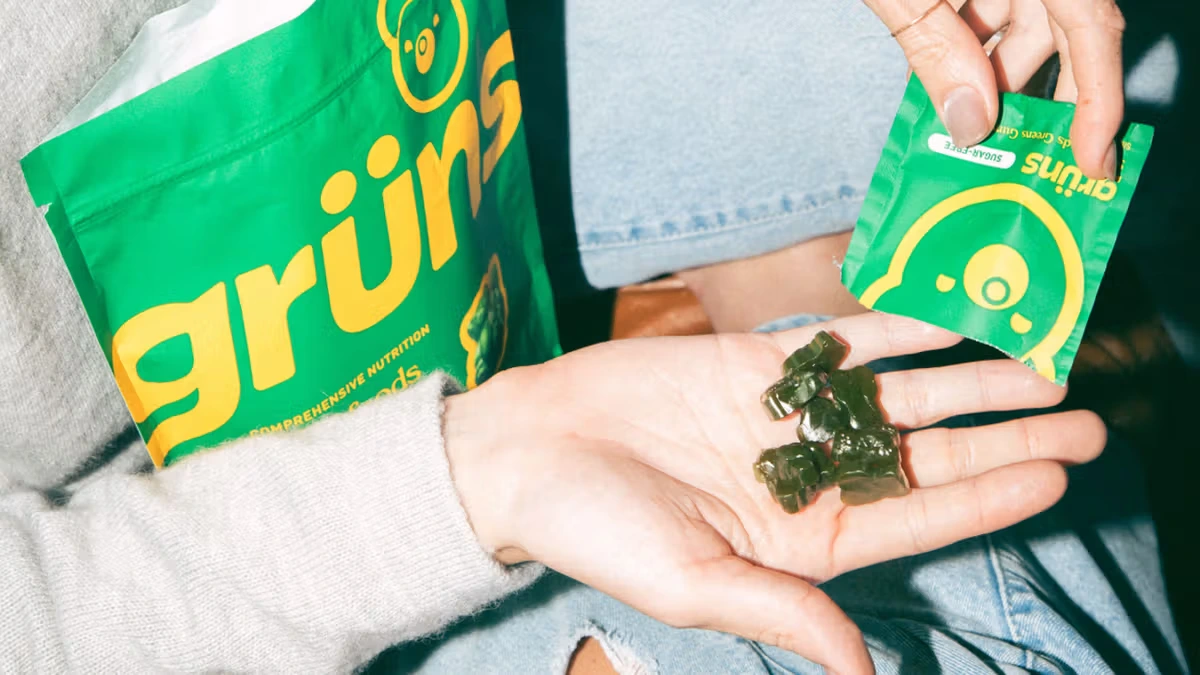
Grüns Packaging and Gummies
Why the Grüns Deal Makes Sense for Unilever
From Unilever’s perspective, this acquisition makes a lot of sense. Large CPG companies are exceptional at scale with distribution, supply chain, and global expansion. Where they’ve historically struggled is speed, brand authenticity, and staying close to the consumer. Grüns, like many modern brands, built strength in exactly those areas: clear positioning, strong brand voice, real engagement, culturally relevant marketing, and a format aligned with how people actually want to consume supplements today.
But where they were particularly sharp was in how they entered the market. They didn’t try to do everything at once. For the first couple of years, they focused on one core product and built a very clear wedge by directly challenging greens powders, particularly AG1. Even their early packaging leaned into that comparison.
Importantly, they didn’t compete on ingredients, but instead competed on experience.
Greens powders, for all their functional benefits, come with friction. You have to scoop, mix, clean, and remember to take it. And, if we’re being honest, many consumers don’t love the taste. The issue is, consumers know it’s good for them, but they just don’t stick with it, which creates a gap.
Grüns Positioning
Grüns positioned themselves directly into that gap, reframing the category around ease, enjoyment, and consistency. By the time the mainstream consumer really became aware of Grüns, around when they began expanding into retail, they were already doing over $150M in online revenue. This was also at a time when products like AG1 were facing growing scrutiny from both scientific and consumer communities around efficacy, transparency, and overall value. That matters. They didn’t enter retail hoping it would create the business. They entered retail after the business was already working.
Grüns Marketing
They then reinvested those profits into building real omnichannel demand across both digital and physical environments. They did this by layering in celebrity endorsements (from Shaun White to Tinx), events, sponsorships, and product seeding to support that transition. Most DTC-first brands struggle here because they assume strong online performance should translate directly into retail velocity, but that’s not how the market works. Retail doesn’t reward potential; it rewards demand.
Future Growth of Grüns
What Grüns did well was nurture that transition intentionally. We’ve taken a different path at Plant People. We've been building as an omnichannel brand from the start, designed to meet customers where they shop without relying on major outside capital until our sixth year. That early investment creates durability and avoids the sharp transitions many brands face moving from DTC into retail. It makes the shift less of a leap and more of a continuation.
On the other side, deals like this are often misunderstood. People assume founders are tapping out or that the brand has peaked. In reality, it’s usually about unlocking the next phase of growth. Scaling beyond a certain point requires a different level of infrastructure. Think working capital, retail depth, international capabilities, and operational complexity. That’s where a strategic partner can meaningfully accelerate brand growth. The real question isn’t why sell, it’s when it makes sense to layer on a real partner.
“People assume founders are tapping out or that the brand has peaked. In reality, it’s usually about unlocking the next phase of growth.”
— Hudson Davis-Ross
What the Grüns Deal Means for Broader CPG
Zooming out, this deal is part of a broader evolution in CPG. The industry is shifting toward products that people actually use, not just products that test well on paper. The gummy category is a perfect example of that evolution. It hasn’t always been clean. Early products leaned heavily into taste but often fell short on formulation quality or meaningful dosing, which created skepticism.
But the category is maturing. The next generation of brands is focused on balance. Delivering strong experience while also investing in better formulations, more thoughtful ingredients, and cleaner labels. The gummy itself isn’t the value. It’s the delivery system. And like any delivery system, what matters most is what’s inside it.
One misconception that still lingers is that gummies are inherently less effective than capsules or powders. That’s not necessarily true. Effectiveness comes down to formulation, dosing, and bioavailability, not just format. Yes, there are constraints, limited space, stability challenges, taste masking, but those are solvable. And in many cases, a slightly less “perfect” formula that someone takes consistently will outperform a perfect one that sits on a shelf and is taken sporadically.
Final Thoughts on the Unilever Acquiring Grüns
At the end of the day, this deal isn’t just a win for Grüns. It’s a signal that the industry is moving toward products people actually use, toward formats that feel natural, not forced, and toward brands that understand behavior is the battleground. We’re still early in this shift, but it’s clearly underway.
I’m genuinely happy for the Grüns team. They executed their playbook well and deserve the outcome. I believe it will only help the entire category move forward, and I’m excited for what’s next.
Hudson Davis-Ross is the Co-Founder and CEO of Plant People. Follow him on LinkedIn here.
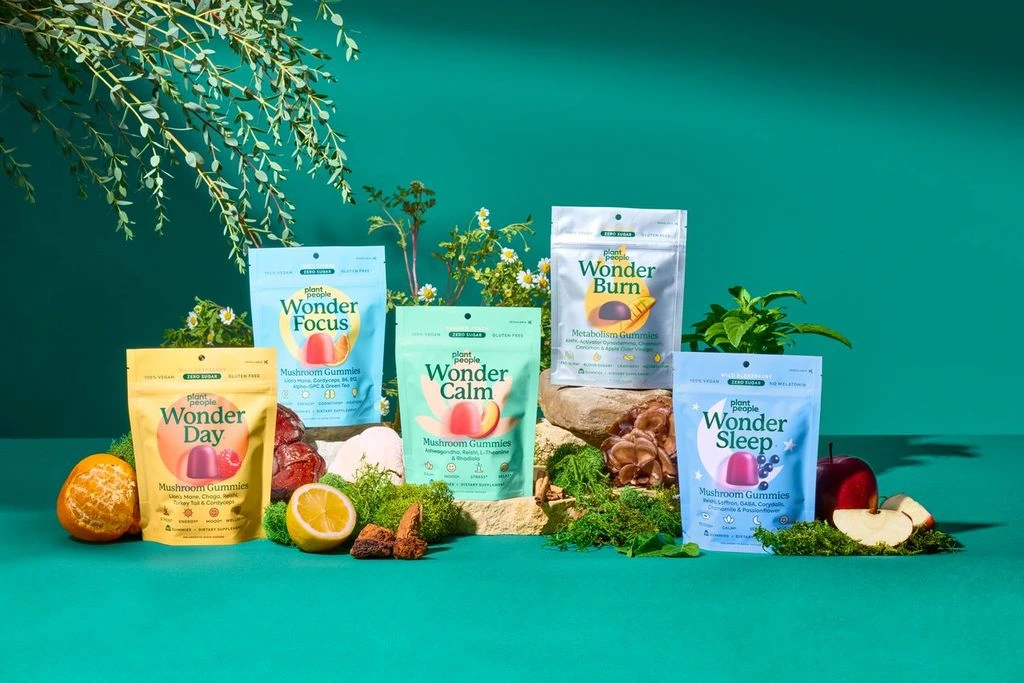
Plant People WonderDay, WonderFocus, WonderCalm, WonderBurn, and WonderSleep Gummies
Join 17k+ subscribed
Get The eCommerce Pulse
The twice-weekly briefing for operators, founders, and partners shaping modern DTC.